Understanding Therapist Credentials: What LPC, LMFT, and LCSW Mean
You're searching for a therapist and notice a string of letters after each name—LPC, LCSW, LMFT, NCC. You wonder if these abbreviations matter, if one type of credential is "better" than another, or if you should choose a therapist based on their letters rather than their approach.
The letters after a therapist's name represent their professional credential—the type of graduate training they completed, the supervised clinical hours they logged, and the licensing exam they passed. Understanding what these credentials mean can help you make a more informed choice when selecting a therapist, though it's worth noting upfront that credential type alone doesn't determine whether a therapist will be a good fit for you.
All three of the most common therapy credentials—Licensed Professional Counselor (LPC), Licensed Marriage and Family Therapist (LMFT), and Licensed Clinical Social Worker (LCSW)—require graduate education, extensive supervised clinical experience, state licensure, and ongoing continuing education. The differences lie in their training focus, philosophical approach, and historical roots rather than in their competence or authority to provide therapy.
What Is a Licensed Professional Counselor (LPC)?
A Licensed Professional Counselor (LPC) is a mental health professional who has completed a master's degree in counseling or a closely related field, typically comprising 48 to 60 semester credit hours. Most states require that the degree come from a program accredited by the Council for Accreditation of Counseling and Related Educational Programs (CACREP).
Before earning independent licensure, LPCs must complete substantial supervised clinical experience. Most CACREP-accredited programs require between 600 and 1,000 hours of supervised clinical work during graduate school through practicum and internship courses. After graduation, aspiring LPCs must complete an additional two or more years of post-degree supervised experience—typically 2,000 to 4,000 hours depending on the state—before they can practice independently.
To become licensed, candidates must pass a national exam, typically the National Counselor Examination (NCE) administered by the National Board for Certified Counselors (NBCC), though some states require the National Clinical Mental Health Counseling Examination (NCMHCE) instead. Most people complete the full path from undergraduate degree to independent practice in five to six years.
LPCs work with individuals, couples, families, and groups on a range of mental health concerns including depression, anxiety, relationship issues, life transitions, grief, trauma, and personal growth. Their training emphasizes developmental perspectives, wellness models, and the counseling relationship itself as a vehicle for change.
What Is a Licensed Marriage and Family Therapist (LMFT)?
A Licensed Marriage and Family Therapist (LMFT) holds a master's degree in marriage and family therapy, psychology, or a closely related field, typically from a program accredited by the Commission on Accreditation for Marriage and Family Therapy Education (COAMFTE).
The distinguishing feature of LMFT training is its systems perspective—viewing individuals within the context of their relationships and family patterns rather than in isolation. Even when working with an individual client, LMFTs are trained to consider how family dynamics, relational patterns, and systemic influences contribute to the presenting problem.
The supervised experience requirements for LMFTs vary by state but are substantial. States typically require between 1,500 and 3,000 hours of supervised clinical experience, with a significant portion dedicated to direct client contact. For example, Texas requires 3,000 hours over a minimum of two years, while North Carolina requires 1,500 supervised clinical hours. Some states allow a portion of these hours to be completed during graduate school.
LMFTs must pass the MFT National Examination administered by the Association of Marital and Family Therapy Regulatory Boards (AMFTRB). The full timeline from undergraduate degree through licensure typically takes four to six years.
While LMFTs specialize in relational and systemic work, they're qualified to treat the full range of mental health conditions. Many LMFTs work primarily with couples and families, but others maintain practices that include significant individual therapy.
What Is a Licensed Clinical Social Worker (LCSW)?
A Licensed Clinical Social Worker (LCSW) has completed a master's degree in social work (MSW) from a program accredited by the Council on Social Work Education (CSWE). MSW programs typically include 32 to 65 credits and take nine months to two years to complete full-time, depending on whether the student enters with advanced standing.
Social work training takes a distinctive approach, emphasizing the person-in-environment perspective. This means LCSWs are trained to consider not just individual psychology but also how social systems, economic factors, community resources, policy, and environmental context shape mental health and well-being. The curriculum includes courses on social welfare policy, human behavior, assessment and diagnosis, and typically 600 to 900 hours of supervised field experience during graduate school.
After earning an MSW, aspiring LCSWs must complete extensive post-degree supervised clinical work—most states require between 2,000 and 3,500 hours, with a portion supervised directly by a licensed LCSW. They must also pass the ASWB clinical exam to become licensed.
The full path to LCSW licensure typically takes eight to nine years, including four years for a bachelor's degree, one to two years for the master's degree, and two years to complete the supervised experience requirements. Once licensed, LCSWs must complete continuing education—typically 20 to 40 hours every two years, depending on the state.
LCSWs can diagnose mental health conditions, provide psychotherapy, conduct biopsychosocial evaluations, and practice independently, including in private practice. Their training in systems, advocacy, and community resources often makes them skilled at connecting clients with practical supports alongside therapeutic work.
How Do These Credentials Differ in Practice?
In day-to-day clinical practice, the differences between LPCs, LMFTs, and LCSWs are often less pronounced than their training backgrounds might suggest. All three credentials authorize independent psychotherapy practice, diagnosis of mental health conditions, and treatment of the full range of presenting concerns.
That said, the philosophical orientations from their training often influence how these clinicians think about problems and solutions. LMFTs tend to consider relational patterns and family systems even when working with individuals. LCSWs often maintain a broader lens that includes social determinants, community context, and systemic barriers. LPCs typically emphasize developmental frameworks, wellness, and the therapeutic relationship.
These are generalizations, though. An LMFT might specialize in trauma and work primarily with individuals. An LCSW might focus their practice on couples therapy. An LPC might use a family systems approach. Training shapes perspective, but individual therapists develop their own specializations, theoretical orientations, and practice focus over time through continuing education, additional certifications, and clinical experience.
What About Psychologists and Psychiatrists?
It's worth briefly distinguishing these master's-level credentials from two other types of mental health professionals: psychologists and psychiatrists.
Psychologists hold doctoral degrees—typically a PhD, PsyD, or EdD—requiring four to six years of academic preparation beyond the bachelor's degree, followed by one to two years of full-time supervised work and licensing examinations (APA). Their training includes extensive focus on psychological assessment, testing, research methodology, and evidence-based treatments. In most states, psychologists cannot prescribe medication, though some states allow it with additional training.
Psychiatrists are medical doctors who attended medical school and earned an MD or DO degree, followed by a residency in psychiatry lasting three to four years (APA). Because of their medical training, psychiatrists can prescribe medications, order lab work, and address the biological aspects of mental illness. Many psychiatrists focus primarily on medication management rather than ongoing talk therapy, though some provide both.
LPCs, LMFTs, and LCSWs cannot prescribe medication in most states (a small number of states allow certain advanced practice privileges). They provide psychotherapy, also called talk therapy or counseling.
Does the Credential Type Matter When Choosing a Therapist?
For most people seeking therapy, the credential type matters less than the individual therapist's experience, specialization, approach, and whether you feel comfortable with them.
When choosing a therapist, consider these factors alongside credentials:
- Specialization in your presenting concern. A therapist who specializes in the issue you're facing—whether that's anxiety, relationship conflict, divorce, trauma, or parenting challenges—will likely be more helpful than a generalist, regardless of credential type.
- Theoretical orientation and approach. Different therapists use different methods—cognitive-behavioral therapy (CBT), emotionally focused therapy (EFT), psychodynamic therapy, and many others. Ask about their approach and whether it aligns with what you're looking for.
- Experience with your population. If you're seeking couples counseling, teen therapy, or help navigating a specific life stage, a therapist with extensive experience in that area will bring relevant expertise.
- Personal fit. Research consistently shows that the therapeutic relationship is one of the strongest predictors of therapy outcomes. A therapist you feel comfortable with, who creates a safe environment and whose style matches your needs, will be more effective than one you don't connect with, regardless of their letters.
Verify that any therapist you're considering holds a valid license in your state. The term "therapist" itself isn't strictly regulated—meaning anyone can technically call themselves a therapist whether or not they have legitimate training (SAMHSA). Checking licensure ensures you're working with a properly trained, credentialed, and regulated professional.
Why Do Therapists Display Their Credentials?
You'll notice that therapists consistently include their credentials after their names on websites, business cards, and correspondence. This isn't just formality—it serves several important functions.
First, it provides transparency about their qualifications and training background, allowing potential clients to verify that the person they're considering is a licensed professional. Second, it distinguishes licensed professionals from unlicensed practitioners, coaches, or others who may offer counseling-adjacent services without the education, supervision, and ethical oversight required for licensure.
Third, in some states, using certain professional titles without the corresponding license is illegal. Displaying credentials clearly helps therapists comply with state regulations and helps clients make informed choices.
What Other Letters Might You See?
Beyond the core credentials, you might notice additional letters after a therapist's name:
- NCC (National Certified Counselor): A national certification for counselors beyond state licensure, requiring additional standards
- RPT or RPT-S (Registered Play Therapist or Supervisor): Specialized training in play therapy, typically used with children
- PMH-C (Perinatal Mental Health Certified): Specialization in maternal mental health and the perinatal period
- EMDR-trained or EMDR-certified: Training in Eye Movement Desensitization and Reprocessing, a therapy approach for trauma
These additional credentials indicate specialized training or certification in particular populations or treatment methods. They can be helpful markers when you're seeking a therapist with specific expertise, but they're supplementary to the core license.
Finding the Right Therapist in Georgia
When you're searching for a therapist, understanding credentials is one piece of the puzzle, but finding someone who specializes in your concerns and creates a safe, collaborative environment matters just as much. Signs that it might be time for therapy often include patterns that aren't improving on their own, whether those patterns involve relationships, mood, anxiety, or life transitions.
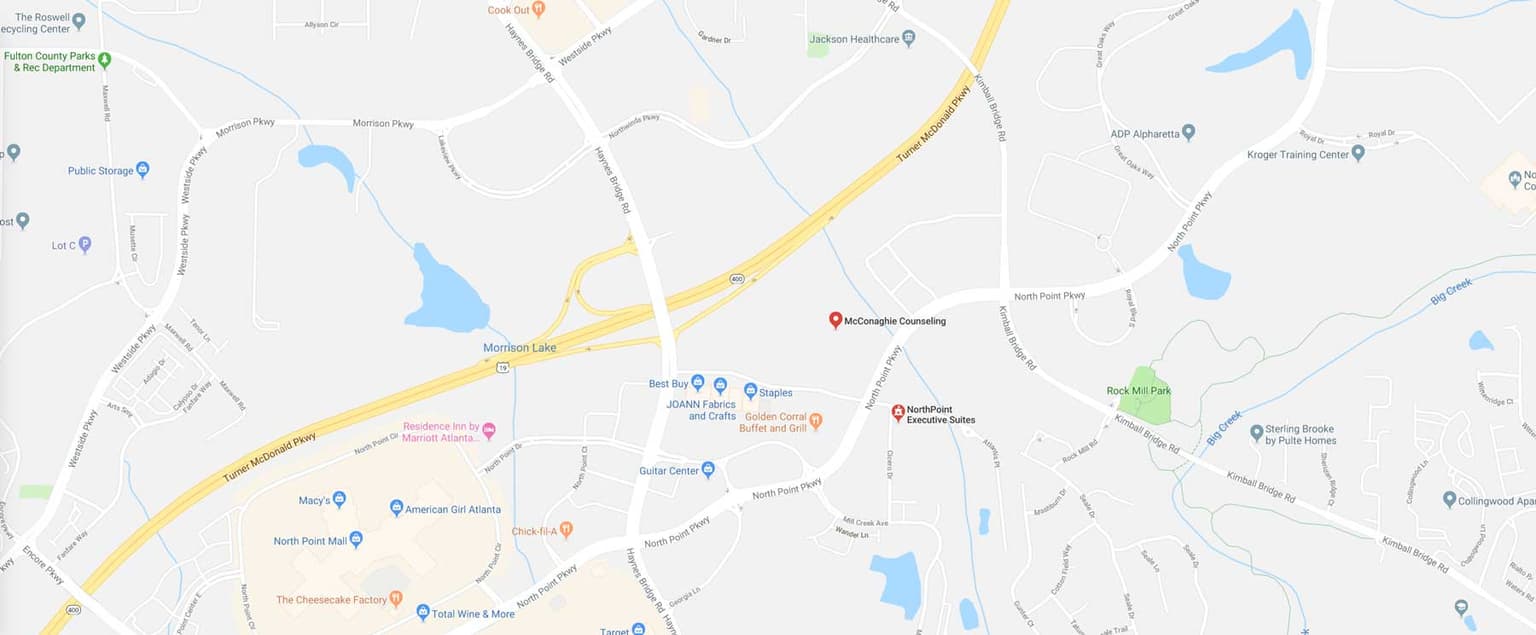
At McConaghie Counseling in Alpharetta, GA, our team includes Licensed Clinical Social Workers (LCSWs), Licensed Professional Counselors (LPCs), and Licensed Marriage and Family Therapists (LMFTs), each bringing their unique training and perspective to their work. We offer in-person therapy in Alpharetta and telehealth throughout Georgia, with specializations in couples counseling, individual therapy, teen and child counseling, family therapy, and divorce and co-parenting support. To learn more or schedule a consultation, visit our contact page.