Emotional Bids: The Small Moments That Strengthen Your Relationship

What if the health of your relationship depends less on grand romantic gestures and more on how you respond when your partner points out a cardinal at the bird feeder? That question sits at the heart of John Gottman's research on emotional bids, the small, everyday attempts partners make to connect. These bids are brief moments when someone reaches out for attention, affection, humor, or support, and how consistently you turn toward those moments predicts whether your relationship will last.
In a six-year study of newlywed couples, Gottman found that partners who stayed together turned toward each other's emotional bids 86% of the time, while those who later divorced turned toward only 33% of the time (Driver & Gottman, 2004). The difference between a stable relationship and one heading toward dissolution often comes down to these unremarkable exchanges that happen dozens of times each day and are easily overlooked.
An emotional bid is any attempt to connect. It might be verbal: "Look at this article," "Did you hear that noise?" or "I had the worst meeting today." It might be nonverbal: a hand reaching for yours, a text with a funny meme, or a sigh that invites you to ask what's wrong. Bids are rarely dramatic. They are the mundane fabric of everyday life, the small gestures that say, "I want to share this moment with you. Are you there?"
Why Do Small Bids Matter More Than Major Conversations?
The accumulated weight of small responses builds relationship security more reliably than occasional deep talks or romantic weekends. Research from Gottman's Love Lab found that how partners handle everyday bids predicted relationship stability better than how they managed major conflicts (Gottman & Levenson, 1992).
Every time you turn toward a bid, you make a small deposit in what Gottman calls the emotional bank account. These deposits accumulate. When your partner shares something inconsequential 20 times in a week and you respond with interest each time, you're building trust at a nervous system level. Your partner learns: this person shows up. This person sees me. This person is reliably interested in my inner world.
Turning away or turning against a bid makes a withdrawal. Miss enough bids and the balance dwindles. Eventually, one or both partners stop making bids altogether because repeated turning away feels like rejection. When that happens, couples describe feeling like roommates who coordinate logistics but share little emotional connection.
The pattern matters more than any single interaction. One missed bid means nothing. But a pattern where bids are consistently ignored or met with irritation creates a felt sense of loneliness even when both people are in the same room.
What Are the Three Ways People Respond to Bids?
Partners respond to emotional bids in three distinct ways: turning toward, turning away, or turning against.
Turning toward means acknowledging the bid with interest, however briefly. If your partner says, "Look at this sunset," turning toward might be stopping what you're doing to look, saying "That's beautiful," or even just making eye contact and nodding. The response doesn't need to be elaborate. It needs to signal: I received your bid. You matter to me right now.
Turning away means missing or ignoring the bid. This often happens unintentionally. Your partner points out the sunset while you're scrolling your phone, and you don't look up. You're not deliberately rejecting them. You're distracted. But from your partner's perspective, the bid went unanswered. Repeated turning away, even when unintentional, accumulates into a pattern of feeling unseen.
Turning against means responding with irritation, dismissiveness, or hostility. If your partner shares excitement about a small accomplishment and you say, "That's what you're excited about?" you've turned against the bid. This response not only rejects the connection but punishes the person for trying. Gottman's research found that turning against is particularly corrosive because it teaches people that reaching out is unsafe.
Most couples don't turn against bids intentionally. It happens when stress is high, patience is low, or when unresolved resentment makes even neutral bids feel like demands. But the impact is the same: the person making the bid learns that connecting carries risk.
How Do You Recognize Bids When They're Happening?
Bids often don't announce themselves. Many happen in passing and require noticing. Recognizing bids means paying attention to the small moments when your partner reaches out, even when the content seems trivial.
Verbal bids often begin with phrases like "Did you see...," "I was thinking about...," "Guess what happened today," or "Can I tell you something?" These are invitations to connect, not just information exchanges. The bid is the reaching out, not the specific content.
Nonverbal bids are even easier to miss. Your partner walks into the kitchen and stands near you while you're cooking. That proximity might be a bid for connection. A hand reaching for yours while watching television is a bid. A sigh, a smile in your direction, or showing you something on their phone are all small bids for attention.
Questions are common bids. "How was your day?" is usually a bid for connection, not just curiosity about your schedule. "Want to watch something together?" is both a logistical question and a bid to spend time together. When you answer only the content and miss the connection request underneath, you've turned away from the bid.
Complaints can also function as bids, though they're harder to recognize. When your partner says, "I'm exhausted," they might be asking for empathy, not just stating a fact. "The house is a mess" might be a bid for help or commiseration rather than criticism. These bids are risky because they can easily be heard as attacks, but they often signal a desire for connection underneath the frustration.
What Gets in the Way of Turning Toward?
The most common barrier to turning toward is distraction. Technology is a major culprit. When you're scrolling your phone and your partner speaks, you might hear the words but miss the bid underneath. Research shows that even having a phone visible during a conversation reduces feelings of connection and trust.
Stress and depletion also interfere. When you're overwhelmed, bids can feel like demands rather than invitations. A partner's request to look at something or talk about their day can register as one more thing on an already impossible list. Turning toward requires small amounts of emotional energy, and when reserves are depleted, those small amounts feel unreachable.
Unresolved resentment changes how bids land. When you're angry about something unrelated, even neutral bids can feel grating. Your partner's enthusiasm about a podcast starts to sound like noise. Their complaints feel like attacks. The bids themselves haven't changed, but the relational context has shifted.
Mismatched expectations also create friction. If one partner makes frequent bids and expects immediate responses while the other needs processing time before engaging, both people end up frustrated. The frequent bidder feels ignored; the slower responder feels pressured. Neither person is wrong, but without negotiation, the pattern creates distance.
Can You Repair After Missing a Bid?
Yes. Repair is built into healthy relationships. You cannot catch every bid, and trying to creates its own problems. The goal is not perfection. The goal is a pattern where turning toward happens more often than turning away.
Repair often involves noticing you missed a bid and circling back. If your partner tried to show you something while you were distracted and you later realize you didn't respond, you can return to it: "Hey, earlier you wanted to show me something. What was that?" This signals that you value their bids even when you miss them in the moment.
Acknowledging when you've turned against a bid also repairs. If stress makes you snap at a harmless comment, you can name that: "I'm sorry I was short with you. That came out wrong." Repair doesn't erase the moment, but it prevents the pattern from calcifying into something larger.
The research on relationship stability emphasizes that successful couples aren't those who never turn away. They're couples who turn toward often enough that the overall balance stays positive. Gottman's work identified a 5:1 ratio of positive to negative interactions as predictive of relationship health. Turning toward creates those positive interactions that buffer against inevitable missed bids and conflicts.
How Does Turning Toward Relate to Other Relationship Practices?
Turning toward overlaps with other evidence-based relationship practices. The concept connects directly to small daily rituals that strengthen connection. When couples establish predictable moments of connection, like a morning check-in or an evening walk, they're creating structured opportunities to turn toward each other's bids. The rituals make it easier to show up consistently because the time is protected.
Turning toward also supports conflict repair. Couples who consistently respond to everyday bids build reservoirs of goodwill that make it safer to work through disagreements. When you know your partner reliably shows up in small moments, you're more likely to give them the benefit of the doubt during harder conversations.
The practice strengthens what researchers call "perceived partner responsiveness," the felt sense that your partner is attuned to your needs and willing to meet them. This responsiveness predicts relationship satisfaction more reliably than many other factors, including shared interests or sexual frequency.
What Does Turning Toward Look Like in Practice?
Turning toward doesn't require elaborate responses. Brief acknowledgment often suffices. When your partner shares something small, you might:
- Make eye contact and respond with genuine interest, even if brief
- Put your phone down or pause what you're doing for a moment
- Ask a follow-up question that shows you heard them
- Offer a small physical gesture like a touch or sitting closer
- Reflect back what they said to confirm you're tracking: "So your meeting ran two hours over?"
The specifics matter less than the consistent message: I see you. I'm here. Your inner world matters to me. These micro-moments of connection are what couples describe when they talk about feeling understood or valued by their partner. The feeling doesn't come from dramatic declarations. It comes from the cumulative weight of small, repeated responses that say, "You are important to me."
How Do You Build a Pattern of Turning Toward?
Start by noticing your own patterns. For one day, track how often your partner makes a bid and how you respond. You don't need to change anything yet. Just observe. Many people are surprised to realize how many bids they miss simply because they weren't paying attention.
Next, identify the barriers. Is it technology? Set boundaries around phone use during key connection times. Is it stress? Communicate clearly when you're depleted and need a moment before engaging, then follow up later. The goal is not to become perfectly responsive. The goal is to understand what gets in your way so you can address it intentionally.
Practice turning toward in low-stakes moments. You don't need to overhaul your entire interaction style. Start with one type of bid. If your partner often shares articles or memes, make it a point to respond with interest when they do. If they tend to reach for physical connection, respond by squeezing their hand or leaning into the hug rather than passively receiving it.
Talk with your partner about bids directly. Many couples have never named this dynamic. When both people understand the concept, they can be more intentional about making bids clear and more generous when bids are missed. You can even create language around it: "I'm making a bid right now," or "I think I just missed your bid. Can you try again?"
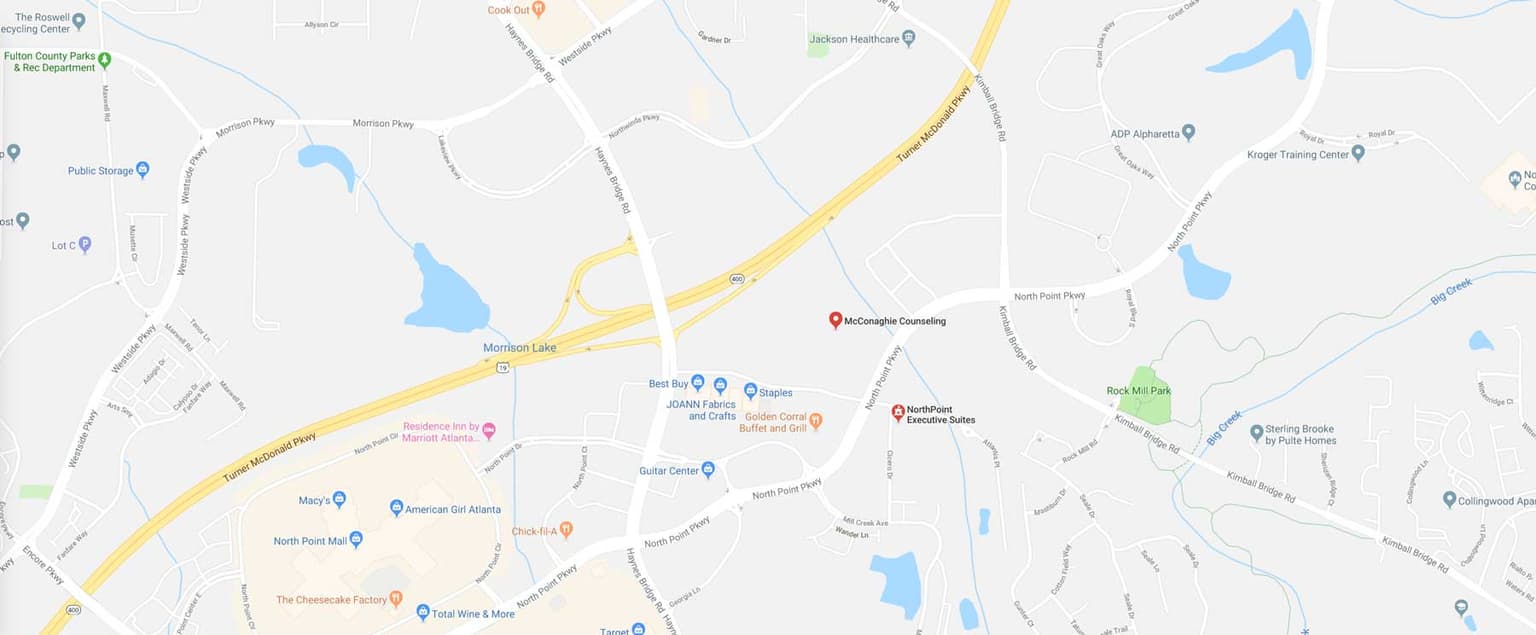
Couples Counseling in Alpharetta, GA
If you're recognizing patterns where bids go unanswered and connection feels difficult to rebuild, working with a therapist can help identify what's getting in the way. Andrew McConaghie, LCSW and Tracy McConaghie, LCSW, RPT/S work with couples in Alpharetta, GA to strengthen everyday connection and rebuild the small moments that sustain relationships over time. We offer both in-person couples counseling and telehealth throughout Georgia. Contact us at mcconaghiecounseling.com/contact to schedule a consultation.
References
Driver, J. L., & Gottman, J. M. (2004). Daily marital interactions and positive affect during marital conflict among newlywed couples. Family Process, 43(3), 301–314. https://pubmed.ncbi.nlm.nih.gov/15386956/
Gottman, J. M., & Levenson, R. W. (1992). Marital processes predictive of later dissolution: Behavior, physiology, and health. Journal of Personality and Social Psychology, 63(2), 221–233. https://pubmed.ncbi.nlm.nih.gov/1403613/
The Gottman Institute. Make or break your relationship: The little things. https://www.gottman.com/blog/little-things-make-break-relationship/
The Gottman Institute. Turning toward our children: Answering bids for connection. https://www.gottman.com/blog/turning-toward-our-children-answering-bids-for-connection/