What Is Emotional Dysregulation in Children? Recognizing the Signs

Emotional dysregulation represents a major health risk in about 5% of children and adolescents, with rates climbing to 26% to 31% among children referred for mental health treatment (Moehler et al., 2022). Yet many parents struggle to distinguish between the normal tantrums and mood swings of childhood and something that signals their child needs additional support. Emotional dysregulation is not about occasional meltdowns or age-appropriate frustration. It describes persistent difficulty managing the intensity of emotions, returning to baseline after upset, and responding to situations with emotions that match the trigger. Children with emotional dysregulation often experience emotions that feel overwhelming and uncontrollable, leading to reactions that interfere with daily life at home, school, and with peers.
What Is Emotional Dysregulation?
Emotional dysregulation is the inability to regulate and organize emotions to produce an appropriate emotional response and subsequent return to baseline. More simply, it describes persistent challenges a child faces in recognizing emotions as they arise, expressing those emotions in ways others can understand, and managing emotional reactions that fit the situation.
All children experience big emotions. Toddlers have meltdowns when tired or frustrated. School-age children get angry when things feel unfair. Teenagers experience intense mood swings as they navigate social pressures and identity formation. These are normal parts of development. Emotional dysregulation becomes concerning when emotional responses are consistently more intense, longer-lasting, or harder to soothe than expected for the child's age, and when these patterns interfere with the child's ability to participate in normal activities.
Children with emotional dysregulation might experience anger that escalates rapidly from zero to explosive with minimal provocation, sadness that persists for hours or days after a disappointment, anxiety that overwhelms them in situations other children handle comfortably, or excitement that becomes so heightened they cannot calm down even when the situation requires it. The key feature is that the intensity and duration of the emotional response do not match what triggered it.
Research shows these patterns emerge early. A national survey found emotional dysregulation prevalence of 11.26% among children aged 5 to less than 8 years, 9.40% among those aged 8 to less than 12 years, and 6.60% among children older than 12 (Baroud et al., 2024). The decline with age likely reflects typical development of regulation skills, but for some children, these skills do not develop as expected without support.
How Do You Know When Emotional Responses Cross the Line?
Parents often ask how to distinguish developmental phases from emotional dysregulation that needs professional attention. Several patterns signal concern.
Intensity disproportionate to the situation. A child with emotional dysregulation reacts to minor frustrations with the same intensity others reserve for major crises. Being told "not right now" triggers the same meltdown as a significant loss. Losing a game produces rage that lasts hours. Small disappointments bring genuine despair. The emotional volume dial seems stuck on high.
Difficulty returning to baseline. Most children recover from upset within a predictable timeframe for their age. Toddlers might need 10 to 15 minutes. School-age children often calm within 20 to 30 minutes with support. Children with emotional dysregulation stay upset for hours. Once escalated, they struggle to use the calming strategies that work for their peers. Parents describe feeling like they are waiting for the storm to pass rather than being able to help their child calm down.
Frequent escalation that surprises even the child. Children with emotional dysregulation often feel blindsided by their own reactions. They might say afterward, "I don't know why I got so mad" or "I didn't mean to, but I couldn't stop." Unlike deliberate misbehavior, these reactions feel out of the child's control. The child may be as distressed by their outburst as the adults around them.
Physical symptoms and behavioral red flags. Emotional dysregulation often shows up in the body. Children might experience frequent stomachaches or headaches when emotionally overwhelmed, have difficulty sleeping because they cannot settle their nervous system, or engage in repetitive behaviors like picking at skin, pulling hair, or other self-soothing attempts that become harmful. Some children become aggressive when emotions escalate, hitting, kicking, or throwing objects. Others withdraw completely, shutting down and becoming unreachable when overwhelmed.
Impairment across multiple settings. The pattern disrupts functioning at home, at school, and with peers. Teachers report the child struggles with transitions, group work, or handling correction. Playdates end early because the child cannot manage disappointment or excitement. Family outings feel unpredictable because small changes in plans trigger significant distress. When dysregulation affects multiple areas of a child's life consistently, that signals a need for support.
What Causes Emotional Dysregulation in Children?
Emotional regulation develops through a combination of neurobiological maturation, learning, and experience. Some children face greater challenges in this developmental process than others.
Neurological and developmental factors play a central role. During childhood and adolescence, the acquisition of skills to modulate emotional responses is closely related to neurobiological maturation at the physiological, cognitive, and behavioral levels. Some children's brains develop these regulatory circuits more slowly or differently. Conditions like ADHD, autism spectrum disorder, sensory processing differences, or learning disabilities often co-occur with emotional dysregulation because they affect the same brain systems responsible for self-regulation.
Early experiences with stress and trauma significantly impact regulation development. The experience of trauma, especially in the form of sexual abuse, physical abuse, or emotional neglect in childhood or adolescence, often leads to severe emotion dysregulation. When children experience chronic stress or unpredictable caregiving early in life, their nervous systems become wired to expect threat, making it harder to regulate responses even when they are safe.
Parenting and environment also influence regulation, though not as singular causes. Emotion regulation and parenting are critical processes for fostering childhood adjustment. Children develop regulation skills through thousands of interactions with caregivers who help them name emotions, model coping strategies, and provide co-regulation when children are overwhelmed. When parents themselves struggle with regulation, experience high stress, or lack support, it becomes harder to provide this consistent scaffolding.
Temperament matters. Some children are born with more intense emotional reactivity. These temperamental differences are not deficits, but they do require more intentional skill-building and support to help the child develop effective regulation strategies.
How Is Emotional Dysregulation Different from Behavioral Problems?
Parents and teachers sometimes interpret emotional dysregulation as willful misbehavior, oppositional behavior, or a discipline problem. This misunderstanding leads to responses that intensify the problem rather than addressing the underlying difficulty.
Behavioral problems involve choices a child makes, even if those choices are influenced by past experiences or limited skills. A child who refuses to follow directions because they are testing limits, seeking attention, or avoiding an unpleasant task is engaging in behavior they can control with appropriate support and consequences.
Emotional dysregulation involves a genuine inability to manage the intensity of emotion in the moment. The child is not choosing to have a meltdown or shut down. Their nervous system is overwhelmed, and the regulatory skills they need are not yet developed or not accessible in that moment. Punishment, consequences, or power struggles do not teach regulation. They often make the situation worse because they add shame and stress to a system already overwhelmed.
This distinction matters enormously for how adults respond. A child struggling with dysregulation needs support building regulatory capacity through co-regulation, skill teaching, and often professional intervention. They need adults who recognize the behavior as a signal of distress rather than defiance.
When Should You Seek Help?
Many children benefit from support developing emotional regulation skills, even when dysregulation does not rise to the level of a clinical diagnosis. Consider seeking professional help when emotional dysregulation interferes with the child's daily functioning, persists despite your efforts to provide structure and support at home, results in the child feeling distressed about their own reactions, leads to peer rejection or social isolation, or creates significant family stress.
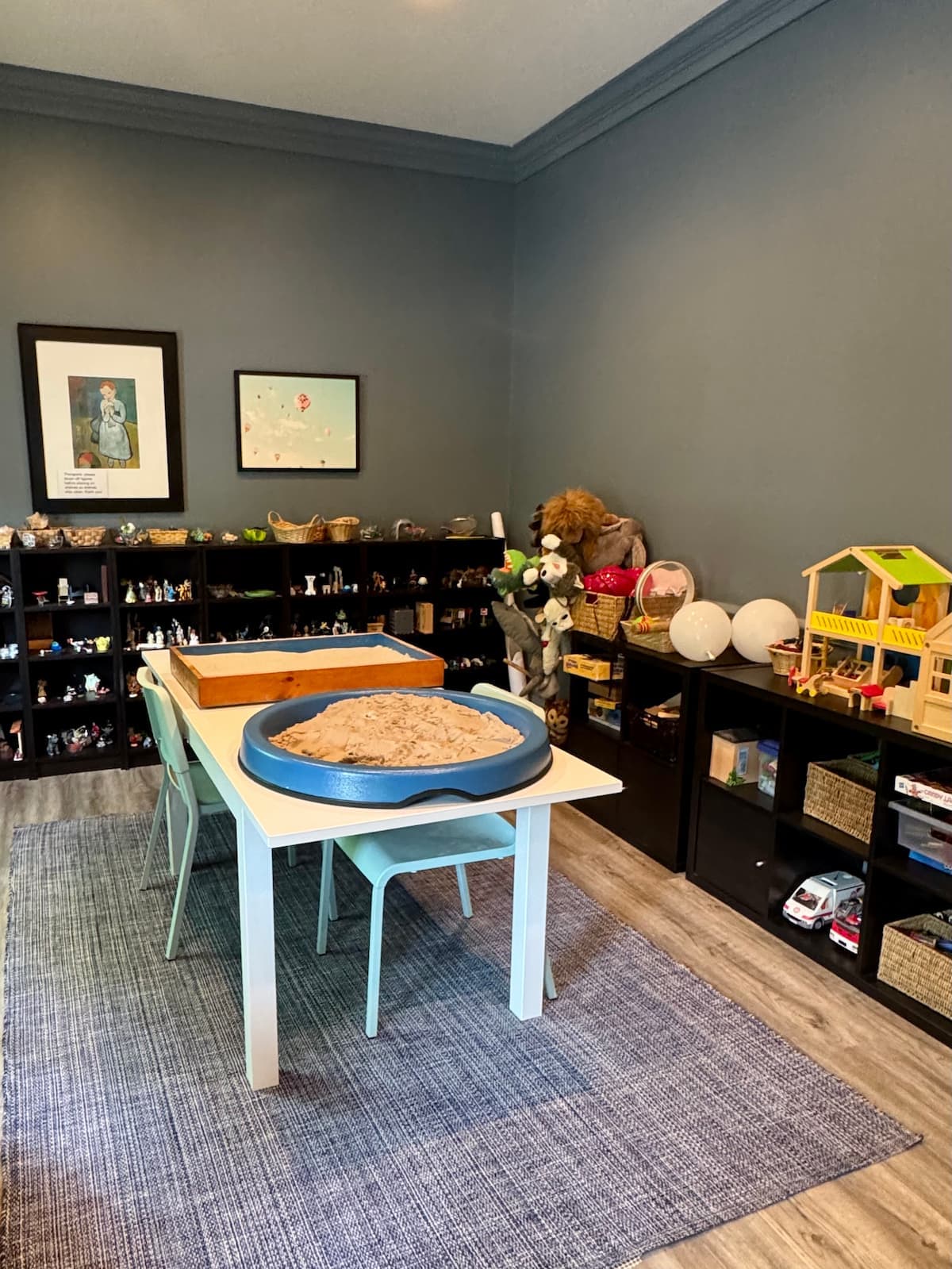
Play therapy offers a developmentally appropriate approach for younger children who cannot yet verbalize their emotional experiences. Through play, children can process overwhelming emotions, practice regulation strategies, and build skills in a way that matches how they naturally communicate. For older children and adolescents, therapists use a combination of cognitive-behavioral strategies, mindfulness techniques, and family work to build regulation skills and address contributing factors.
Family therapy can help when patterns in the family system contribute to or are affected by a child's dysregulation. Parents learn how to provide co-regulation effectively, create environments that support the child's developing skills, and address their own stress responses that may be part of the cycle. Many parents find that understanding dysregulation as a skill deficit rather than willful misbehavior transforms how they relate to their child and opens paths to progress that felt blocked before.
The good news is that with appropriate support, children can develop stronger emotional regulation skills. Early childhood represents a particularly important window because young children are shifting from depending on external regulation from caregivers toward exercising increasingly deliberate control. Intervention during this developmental period can set children on trajectories toward more adaptive functioning as they grow.
If you notice persistent patterns of emotional intensity, difficulty calming, or reactions that interfere with your child's ability to participate fully in family life, school, and friendships, reaching out for an evaluation is a reasonable step. Early support makes a meaningful difference.
Andrew McConaghie, LCSW and Tracy McConaghie, LCSW, RPT/S work with children and families navigating emotional regulation challenges through play therapy and family counseling. McConaghie Counseling offers in-person therapy in Alpharetta, GA and telehealth across Georgia. You can reach the practice at 770-645-8933 or schedule online.
References
Moehler, E., Brunner, R., & Sharp, C. (2022). Editorial: Emotional Dysregulation in Children and Adolescents. Frontiers in Psychiatry, 13, 883753. https://pmc.ncbi.nlm.nih.gov/articles/PMC9021591/
Baroud, E., Alrojolah, L., Shamseddeen, W., Ghandour, L. A., Elbejjani, M., Barakat, M., Dirani, L. A., & Maalouf, F. T. (2024). Prevalence and correlates of emotion dysregulation among children and adolescents in Lebanon: results from a National Survey. BMC Psychiatry, 24(1), 698. https://pmc.ncbi.nlm.nih.gov/articles/PMC11487767/