How Play Therapy Helps Children Through Family Change
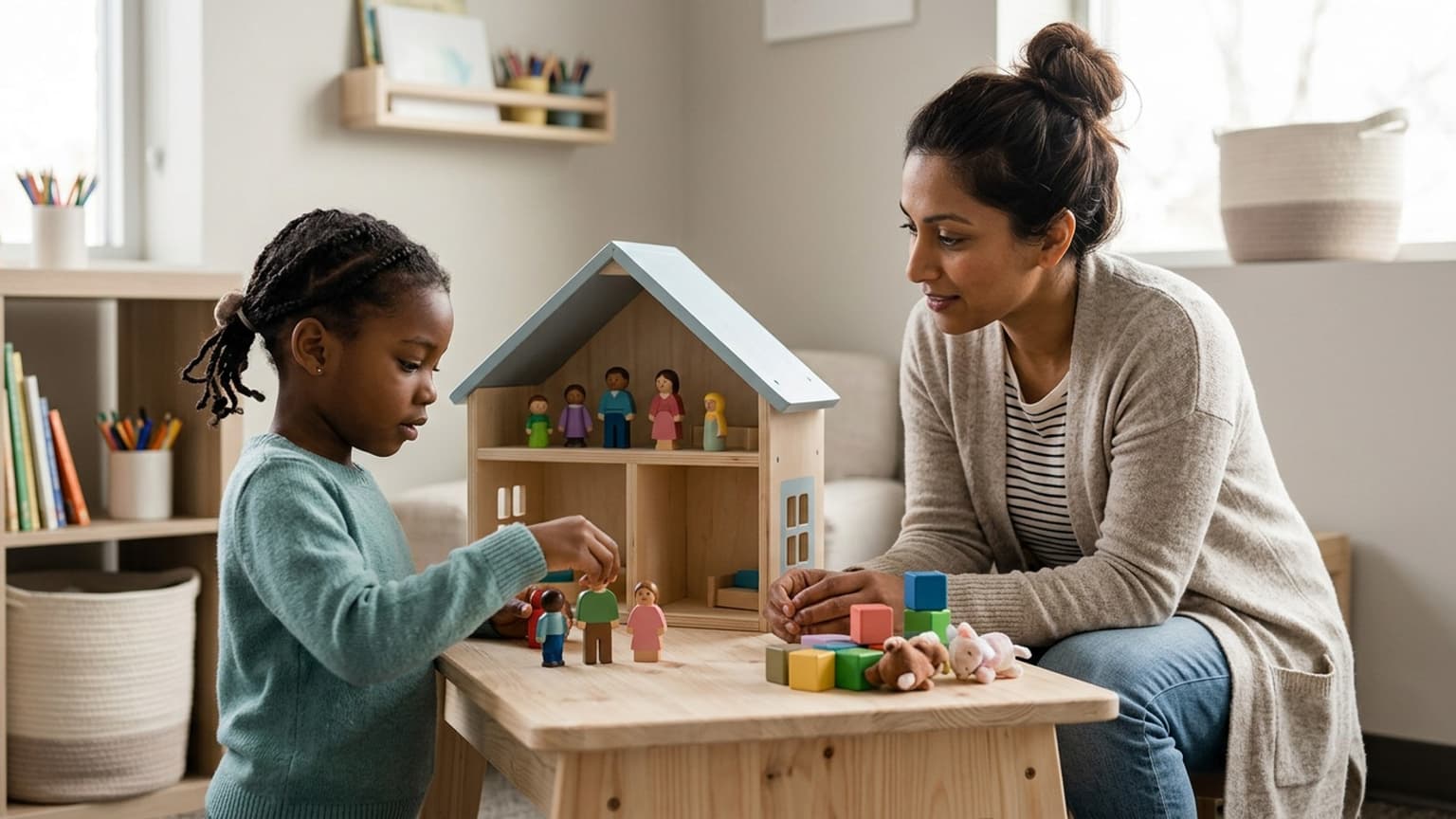
Play therapy is a specialized form of counseling that uses children's natural language—play—to help them process difficult emotions and experiences they may not have the words to express. When families go through divorce, separation, or other major transitions, children often struggle to articulate what they're feeling. Play therapy provides a safe space where trained therapists use toys, art materials, and guided activities to help children work through these changes at their own pace.
Research consistently demonstrates play therapy's effectiveness for children navigating family transitions. A comprehensive overview published in Materia Sociomed found that play therapy represents "an important alternative for effective intervention in major child-related problems," with measurable reductions in anxiety and behavioral difficulties across multiple child populations (Koukourikos et al., 2021). For children experiencing the stress of parental divorce or family restructuring, this therapeutic approach addresses both the emotional processing they need and the behavioral challenges that often emerge during times of upheaval.
The approach works because it meets children where they developmentally are. Rather than asking a seven-year-old to sit and talk about complex feelings of loss, loyalty conflicts, or confusion about their changing family structure, play therapy allows them to express these experiences through the dolls they arrange, the stories they create, or the art they make.
Why Is Play Therapy Particularly Effective for Children of Divorce?
Children experiencing divorce or family separation face emotional challenges that can be difficult to verbalize. They may feel caught between parents, worry about being abandoned, blame themselves for the split, or struggle with anger they don't know how to express appropriately. These feelings are developmentally normal responses to a major loss, but without healthy outlets, they can manifest as behavioral problems, academic difficulties, sleep disturbances, or social withdrawal.
Play therapy addresses these challenges through several mechanisms. First, it provides emotional distance—a child can explore scary or painful feelings through puppets or figurines rather than speaking directly about their own experience, which can feel safer. Second, play allows for repetition and mastery. Children will often reenact divorce scenarios multiple times in their play, gradually gaining a sense of control over an experience that felt chaotic and powerless in real life.
Third, play therapy helps children develop emotional regulation skills. Through therapeutic play, children practice identifying feelings, expressing them in healthy ways, and calming themselves when overwhelmed. These are precisely the skills they need to navigate the ongoing reality of divorced family life—moving between homes, managing different household rules, and coping with changes in family structure.
What Does Play Therapy for Family Transitions Look Like?
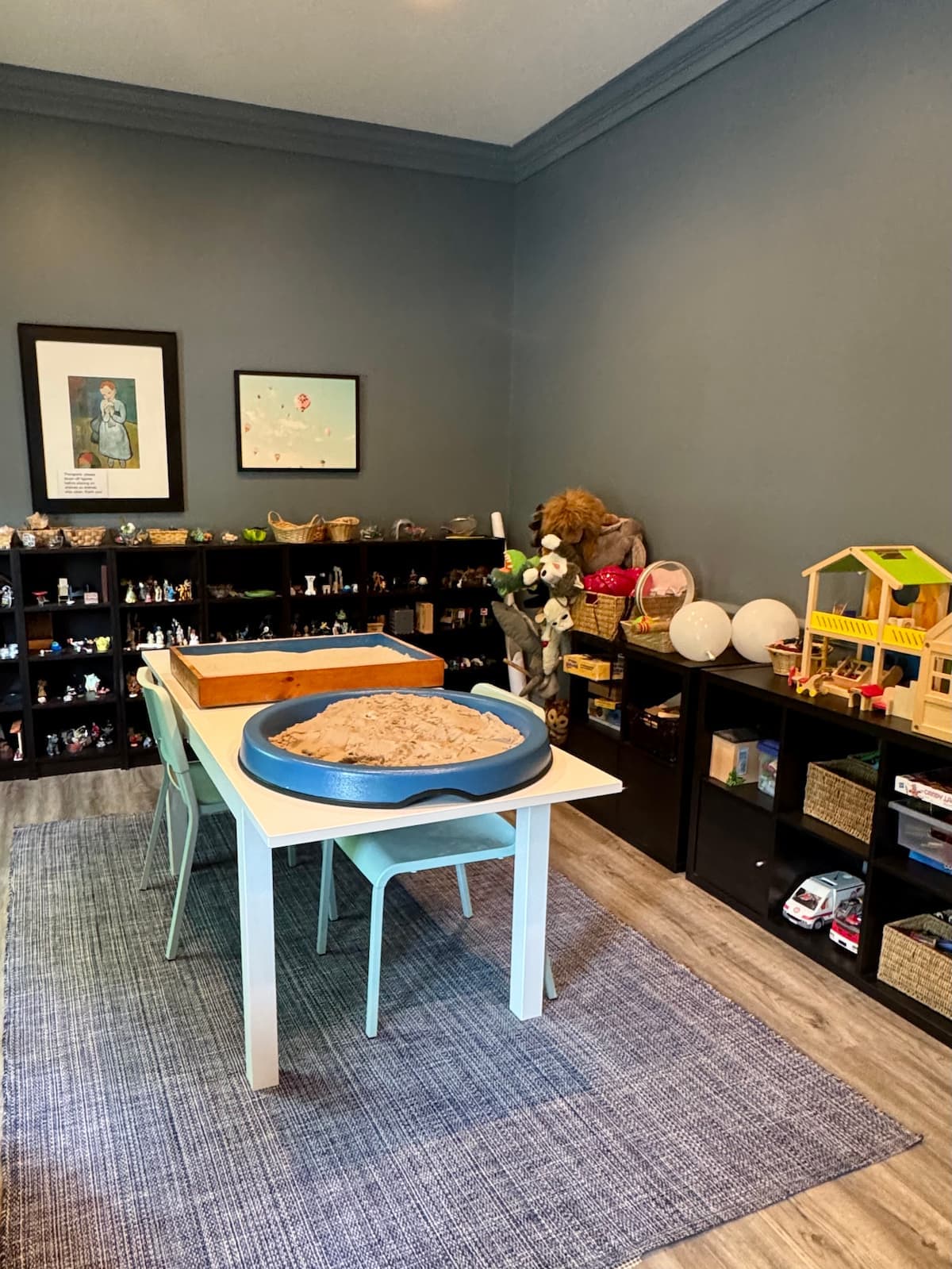
In a typical play therapy session for a child dealing with family change, the therapist creates a safe, consistent environment filled with carefully selected materials. These might include dollhouses, family figures, sand trays, art supplies, costumes, and various toys that allow for symbolic expression.
The therapist observes how the child engages with these materials, paying attention to themes that emerge. A child might repeatedly set up a dollhouse with parents in separate rooms, or create scenarios where a child figure moves back and forth between two homes. These play narratives reveal the child's internal experience and concerns in ways that direct questioning often cannot.
Importantly, play therapy is not about interpreting every action or forcing insight. Rather, the therapist uses reflective statements, gentle questions, and strategic play involvement to help the child feel understood and to gradually make sense of their experience. The therapeutic relationship itself—consistent, accepting, and child-centered—provides a foundation of safety during a time when the child's world may feel unpredictable.
Play therapists may also incorporate specific techniques depending on the child's needs. For children anxious about transitions between parents' homes, they might use play to practice coping strategies. For children carrying guilt about the divorce, therapeutic storytelling or puppet play can gently challenge those inaccurate beliefs. For children experiencing anger, controlled expressive activities provide safe outlets.
How Long Does Play Therapy Take to Help?
The duration of play therapy varies based on the child's age, the complexity of the family situation, and the child's existing coping resources. Some children show improvement in behavioral symptoms within 8-12 sessions, while others benefit from longer-term support as they navigate ongoing family transitions.
Published clinical case reports and reviews describe play therapy reducing symptoms of anxiety, depression, and behavioral problems in school-age children (Gupta et al., 2023; Koukourikos et al., 2021). The research suggests that consistent weekly sessions provide the structure and relationship stability children need when other aspects of their life feel uncertain.
For children dealing with divorce specifically, therapy often continues through major transition points—when parents first separate, when legal proceedings conclude, when new partners enter the picture, or when living arrangements change. The play therapy room becomes a stable constant during periods of change.
It's worth noting that play therapy's effectiveness improves when parents are involved appropriately. This doesn't mean parents sit in sessions (typically they don't for school-age children), but rather that therapists communicate with parents about themes emerging in play and provide guidance on supporting the child at home.
What Age Children Benefit Most from Play Therapy?
Play therapy is most effective with children aged 3-12 years old, as this developmental range relies primarily on play for communication and expression. Preschool and school-age children are particularly suited to play-based interventions because they haven't yet developed the abstract thinking and verbal processing abilities that traditional talk therapy requires.
Very young children (3-5 years) use play therapy to express feelings about family change that they lack the vocabulary to describe. School-age children (6-12 years) use it both for emotional expression and to practice problem-solving skills related to their changing family structure. As children approach adolescence, therapists often begin blending play-based techniques with more verbal processing, matching the intervention to the child's developmental level.
Children in transition periods—after a divorce, change of residence, or arrival of new family members—are specifically identified in research as prime candidates for play therapy intervention (Koukourikos et al., 2021).
Can Play Therapy Prevent Long-Term Problems from Divorce?
While divorce inevitably involves loss and adjustment for children, its long-term impact varies considerably. Some children emerge resilient and well-adjusted, while others carry difficulties into their adult relationships and mental health. Early intervention through play therapy can significantly influence which trajectory a child follows.
Play therapy helps children develop crucial capacities during the divorce transition: emotional literacy (identifying and naming feelings), healthy expression (releasing difficult emotions without hurting themselves or others), and adaptive coping (managing stress in constructive ways). These skills serve children not just during the divorce itself but throughout their development.
Additionally, play therapy can interrupt negative patterns before they become entrenched. A child who learns through therapy that their feelings are valid and manageable is less likely to suppress emotions in ways that create problems later. A child who processes divorce-related guilt or loyalty conflicts in therapy is less likely to carry distorted beliefs into their own future relationships.
Research on trauma and childhood adversity consistently shows that a supportive therapeutic relationship can buffer against negative outcomes. Play therapy provides exactly this kind of relationship at a crucial time.
What Should Parents Look for in a Play Therapist?
If your child is struggling with family changes, finding the right play therapist matters. Look for licensed mental health professionals (Licensed Clinical Social Workers, Licensed Professional Counselors, or Licensed Marriage and Family Therapists) who have specialized training in play therapy. The credentials RPT (Registered Play Therapist) or RPT-S (Registered Play Therapist-Supervisor) indicate advanced training through the Association for Play Therapy.
Ask potential therapists about their experience working specifically with children of divorce or family transitions. A therapist familiar with the common challenges these children face—loyalty conflicts, fears about abandonment, grief over family structure loss, adjustment to two households—will be better equipped to address your child's specific needs.
Also consider the therapist's approach to involving parents. Effective play therapists maintain appropriate confidentiality with the child while also communicating regularly with parents about progress and providing guidance on supporting the child between sessions. This collaborative approach tends to produce better outcomes than therapy that operates in complete isolation from the home environment.
How Can Parents Support Their Child During Play Therapy?
Parents play a crucial role in their child's healing, even when not directly involved in therapy sessions. Maintain consistency in bringing your child to appointments—the therapeutic relationship requires time to develop, and irregular attendance undermines progress.
Avoid pressing your child for details about what happens in therapy. The play therapy room needs to feel like the child's private space. Your therapist will share relevant themes and progress with you separately. Instead of asking "What did you do in therapy today?", you might simply say "I'm glad you had time with your therapist today."
Apply strategies your therapist suggests at home, whether these involve specific responses to difficult behaviors, ways to talk about the divorce, or routines to ease transitions between homes. The work happens both in the therapy room and in daily life.
Most importantly, maintain your own emotional stability as much as possible. Children dealing with divorce need to see that adults can manage difficult feelings without falling apart. If you're struggling with the divorce yourself, seeking your own therapy or support isn't just good for you—it's good for your child. When parents cope better, children cope better.
Getting Started with Play Therapy in Alpharetta, GA
If your child is showing signs of distress related to divorce or family changes—increased anxiety, behavioral problems, regression, sleep difficulties, or withdrawal—play therapy may help. The sooner children receive support during family transitions, the better equipped they are to process these changes in healthy ways.
McConaghie Counseling offers play therapy and child counseling in Alpharetta, GA, with therapists trained in working with children and families navigating divorce and family transitions. Andrew McConaghie, LCSW and Tracy McConaghie, LCSW, RPT/S lead a practice committed to helping children develop the skills and resilience they need during difficult times. Contact us to learn how play therapy can support your child.
References
Gupta, N., Chaudhary, R., Gupta, M., Ikehara, L. H., Zubiar, F., & Madabushi, J. S. (2023). Play therapy as effective options for school-age children with emotional and behavioral problems: A case series. Cureus, 15(6), e40093. https://pmc.ncbi.nlm.nih.gov/articles/PMC10328142/
Koukourikos, K., Tsaloglidou, A., Tzeha, L., Iliadis, C., Frantzana, A., Katsimbeli, A., & Kourkouta, L. (2021). An overview of play therapy. Materia Sociomed, 33(4), 293-297. https://pmc.ncbi.nlm.nih.gov/articles/PMC8812369/