Signs of Anxiety in Young Children: When Play Therapy Can Help
How do you know when your young child's fears and worries cross the line from normal developmental phases into something that needs professional help? Young children experience many fears as part of healthy development—stranger anxiety in infancy, separation worries in toddlerhood, monsters under the bed at age four. But when fearfulness becomes persistent, interferes with daily activities like school or play, or causes physical symptoms with no medical cause, your child may be experiencing an anxiety disorder. Research shows that anxiety symptoms in children often emerge by age 6 (NIMH). The good news: anxiety in young children is highly treatable, often without medication, and play therapy offers a developmentally appropriate way for children to process what they can't yet put into words.
What Are the Signs of Anxiety in Young Children?
Young children lack the vocabulary and cognitive development to say "I feel anxious" or explain their internal experience. Instead, anxiety shows up through behavior and physical complaints.
According to the National Institute of Mental Health, parents should watch for children who (NIMH):
Frequent fearfulness or excessive worry. While all children worry sometimes, anxious children seem fearful much of the time, worry about things other children their age don't worry about, or can't be reassured even when you address their concerns directly.
Physical complaints with no medical cause. Anxious young children frequently complain of stomachaches, headaches, or feeling sick—particularly before school, social events, or separations from parents. Pediatricians find no underlying medical explanation, but the child's distress is genuine.
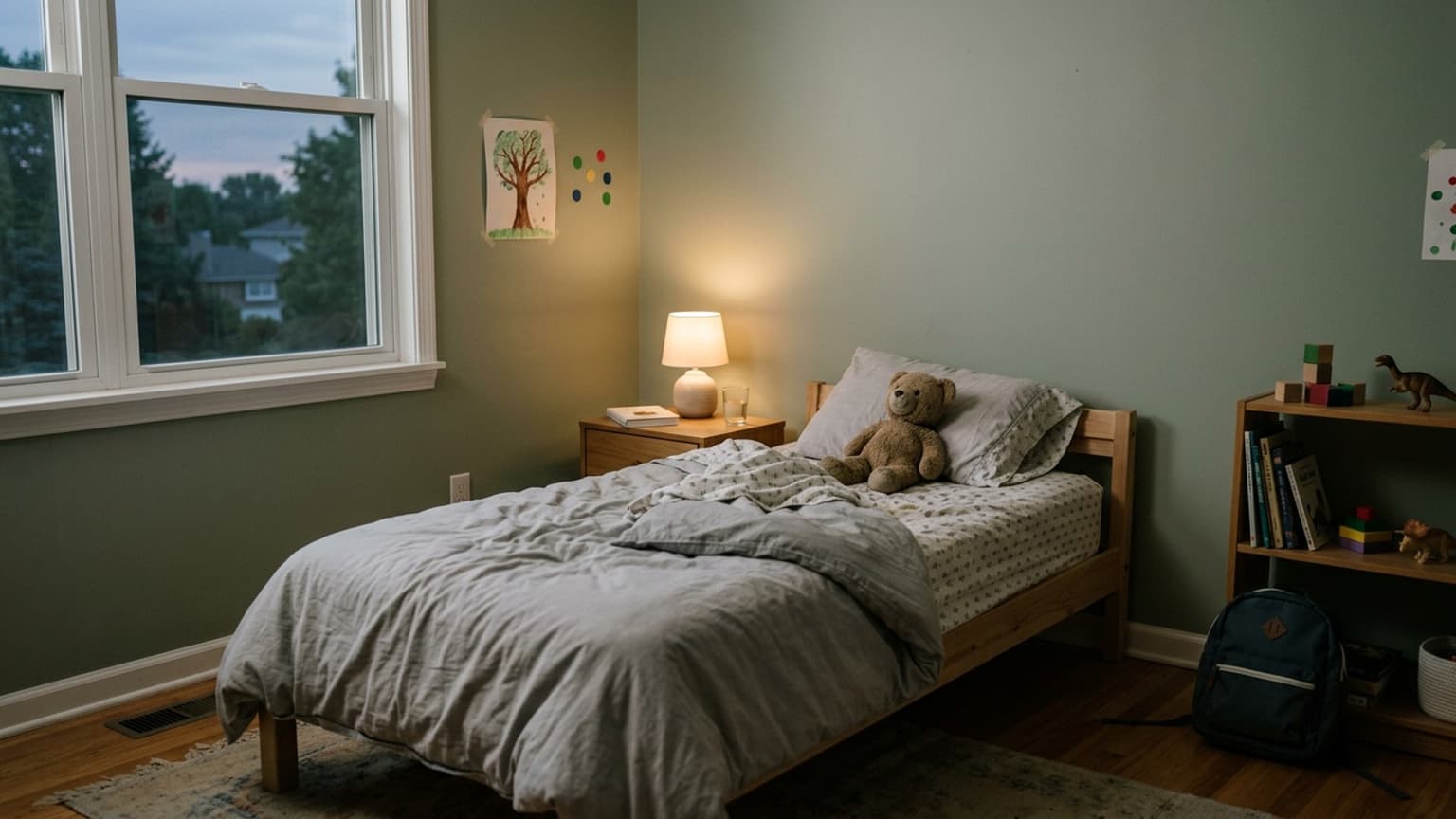
Sleep disturbances. Anxiety disrupts sleep in multiple ways: difficulty falling asleep due to racing thoughts or fears, frequent nightmares, resistance to sleeping alone, or early morning waking. Sleep problems that persist for weeks despite consistent bedtime routines may signal anxiety.
Repetitive behaviors or compulsive checking. Some anxious children develop rituals to manage their fears—repeatedly checking that doors are locked, asking the same reassurance questions over and over, or insisting on rigid routines that can't vary without significant distress.
Avoidance of normal activities. Anxious children may refuse to attend school, resist playdates, avoid age-appropriate separation from parents, or withdraw from activities they previously enjoyed. The avoidance is driven by fear, not defiance.
Clinginess and difficulty with separation. While separation anxiety is normal in toddlers, it becomes concerning when it persists past the expected developmental stage, intensifies rather than improves, or prevents the child from participating in school or other normal activities.
Physical tension or restlessness. Young children may not describe feeling "on edge," but you might notice constant fidgeting, difficulty sitting still, muscle tension, or physical expressions of distress like trembling or rapid breathing in triggering situations.
How Do You Know If It's Normal Worry or an Anxiety Disorder?
The distinction comes down to duration, intensity, and impact on functioning.
All children experience fears and worries as part of normal development. What distinguishes an anxiety disorder is when these feelings last for weeks or months, cause significant distress for the child, and interfere with daily functioning at home, school, or with friends (NIMH).
A four-year-old who has nightmares for a few nights after watching a scary movie is having a normal reaction. A four-year-old who refuses to sleep alone for three months, develops nightly panic about monsters despite repeated reassurance, and whose sleep disruption affects their daytime mood and behavior may be experiencing an anxiety disorder.
Trust your instinct as a parent. If your child's anxiety feels different from typical developmental fears, persists despite your efforts to comfort and support them, or makes it hard for them to do normal childhood things, an evaluation is warranted.
What Types of Anxiety Affect Young Children?
The CDC identifies several anxiety disorders that can emerge in early childhood:
Separation anxiety disorder involves intense fear when separated from parents or primary caregivers that goes beyond what's developmentally typical. The child may refuse to attend school, resist sleepovers, or become physically distressed when parents leave.
Specific phobias are extreme fears of particular objects or situations—dogs, loud noises, medical procedures, or bugs—that cause the child to avoid the feared thing even when it significantly limits their activities.
Social anxiety disorder manifests as intense fear of social situations where the child might be observed or judged by others. Even very young children can develop social anxiety, though it often intensifies as they enter school settings.
Generalized anxiety disorder involves excessive, uncontrollable worry about many different things—school performance, family safety, natural disasters, health—that's difficult for the child to manage and often seems disproportionate to the actual situation.
Why Does Anxiety Develop in Young Children?
Anxiety disorders result from a combination of genetic predisposition, brain chemistry, temperament, and environmental factors. Some children are born with a more reactive nervous system that makes them more vulnerable to anxiety. Stressful life events—divorce, moving, a parent's illness, witnessing conflict—can trigger anxiety in vulnerable children.
Early intervention matters because untreated childhood anxiety often persists into adolescence and adulthood. Children who learn coping strategies early develop resilience that serves them throughout life.
How Does Play Therapy Help Anxious Young Children?
Play is the natural language of childhood. Before children develop sophisticated verbal skills, they use play to make sense of their world, process experiences, and express emotions they don't have words for.
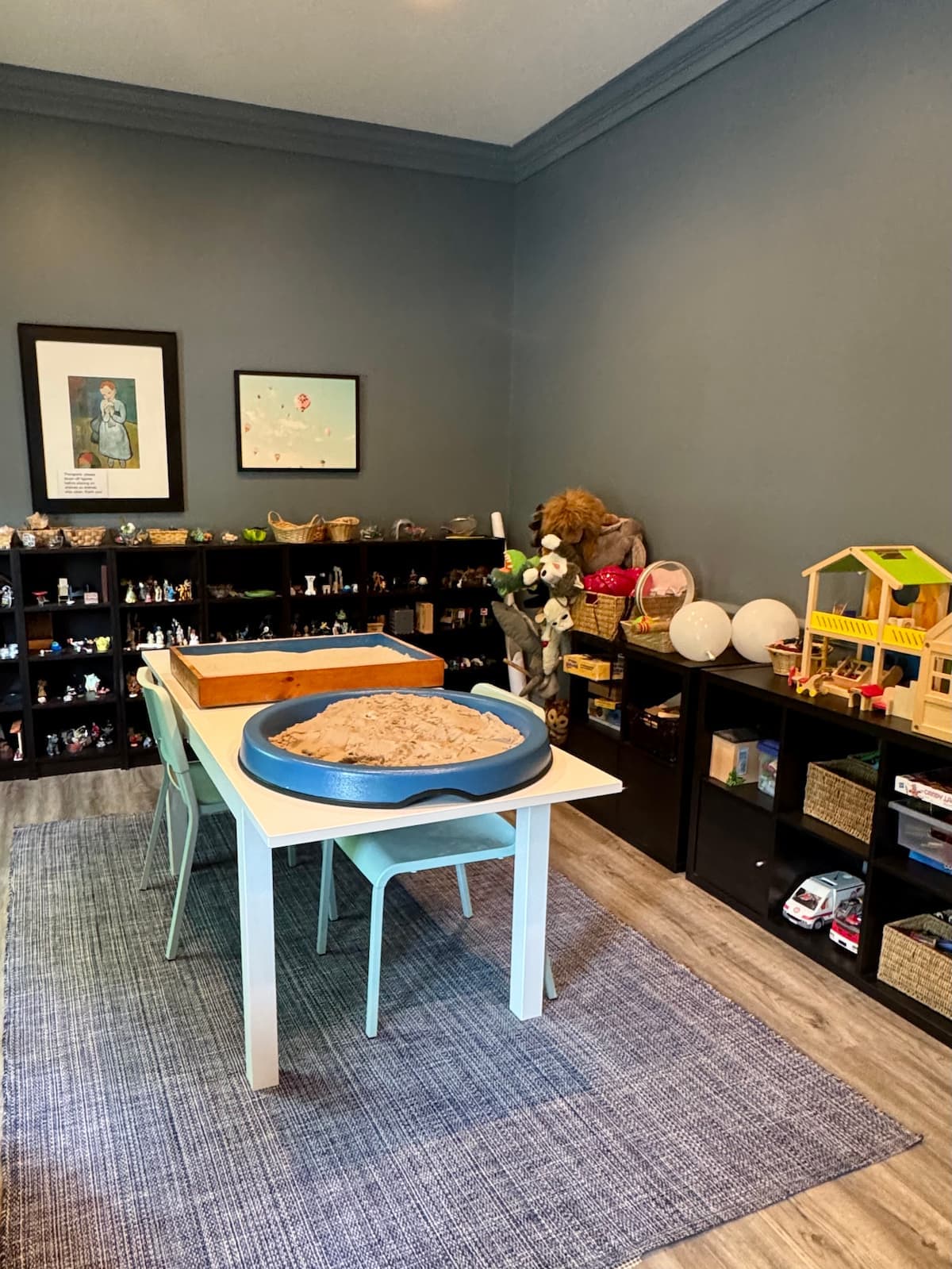
Play therapy provides children a safe, accepting environment where they can work through fears and develop coping skills using toys, art materials, sand trays, and other play-based tools. A trained play therapist observes how the child plays, facilitates their emotional expression, and uses play activities to teach anxiety-management skills in ways that match the child's developmental level.
Research demonstrates that play therapy is effective for reducing anxiety in children. A comprehensive meta-analysis of play therapy outcomes found an average effect size of 0.66, meaning children who received play therapy performed approximately 25 percentile units higher on outcome measures compared to children who didn't receive treatment (LeBlanc & Ritchie, 2001). The analysis also found that involving parents in the therapeutic process produced the strongest results.
A systematic review of play therapy with hospitalized children found that therapeutic play interventions decreased anxiety during hospital stays, helped children move from passive to active roles in managing their fears, and reduced negative emotions before stressful medical procedures (Godino-Iáñez et al., 2020).
What Happens in a Play Therapy Session?
Play therapists use both non-directive and directive approaches depending on what each child needs.
In non-directive play therapy, the child freely chooses activities during their session. The therapist observes, reflects feelings, and may participate in the child's play, but the child leads. This approach trusts that children will naturally gravitate toward play activities that help them process whatever they're working through emotionally.
In directive play therapy, the therapist designs specific play-based activities to address the child's anxiety. This might include using puppets to practice coping skills, creating a sand tray scene about a feared situation, or playing games that teach emotion regulation strategies. Even when the therapist leads, the activities remain playful and developmentally appropriate.
Many play therapists combine both approaches, responding flexibly to what each child needs in each session. Children might spend some sessions in free play processing emotions indirectly, and other sessions learning specific skills through therapist-directed activities.
For anxious children specifically, play therapy helps by:
- Providing a safe space to express fears that feel too big to talk about
- Teaching emotional regulation skills through games and activities
- Gradually exposing children to feared situations in a controlled, playful way
- Building confidence and a sense of mastery over scary feelings
- Giving children tools they can use outside of therapy when anxiety shows up
What Role Do Parents Play?
Research consistently shows that parental involvement strengthens play therapy outcomes (LeBlanc & Ritchie, 2001). While the child's sessions remain confidential to create a safe therapeutic relationship, play therapists meet regularly with parents to provide feedback, understand how the child is doing at home, and teach parents strategies to support their child's progress.
Parents learn how to respond to their child's anxiety in ways that support rather than reinforce it—offering comfort without rescuing, validating feelings without amplifying fears, and gradually encouraging the child to face manageable challenges rather than avoid everything that feels scary.
The therapist and parents work as a team, with the shared goal of helping the child develop the skills and confidence to manage anxiety effectively.
When Should You Seek Help?
If your child's anxiety symptoms have lasted for several weeks, interfere with normal activities, cause them significant distress, or worry you as a parent, seeking an evaluation is the right step. The United States Preventive Services Task Force recommends screening for anxiety in children beginning at age 8, but clinical judgment supports evaluating younger children when parents or pediatricians have concerns.
You don't need to wait until anxiety becomes severe before seeking help. Early intervention often prevents anxiety from becoming more entrenched and helps children develop coping skills before patterns of avoidance become habitual.
Trust your knowledge of your child. If something feels different or concerning, professional guidance can help you understand whether what you're seeing is typical development or whether your child would benefit from support.
Anxiety in young children is common, and with appropriate treatment like play therapy, children learn to manage their fears and worries in ways that allow them to fully participate in childhood. If you're concerned about anxiety in your young child, reaching out for help is a sign of strength and care—not an overreaction.
If you're in Alpharetta, GA and concerned about anxiety in your young child, Andrew McConaghie, LCSW and Tracy McConaghie, LCSW, RPT/S offer in-person child counseling and play therapy with a warm, nonjudgmental approach that helps children build the skills to manage worry and fear. Contact us at 770-645-8933 or visit our contact page to schedule a consultation.
References
Centers for Disease Control and Prevention. (n.d.). Anxiety and depression in children. https://www.cdc.gov/children-mental-health/about/about-anxiety-and-depression-in-children.html
Godino-Iáñez, M. J., Martos-Cabrera, M. B., Suleiman-Martos, N., Gómez-Urquiza, J. L., Vargas-Román, K., Membrive-Jiménez, M. J., & Albendín-García, L. (2020). Play therapy as an intervention in hospitalized children: A systematic review. Healthcare, 8(3), 239. https://pmc.ncbi.nlm.nih.gov/articles/PMC7551498/
LeBlanc, M., & Ritchie, M. (2001). A meta-analysis of play therapy outcomes. Counselling Psychology Quarterly, 14(2), 149-163.
National Institute of Mental Health. (n.d.). Any anxiety disorder among children. https://www.nimh.nih.gov/health/statistics/prevalence/any-anxiety-disorder-among-children.shtml
National Institute of Mental Health. (n.d.). Children and mental health: Is this just a stage? https://www.nimh.nih.gov/health/publications/children-and-mental-health