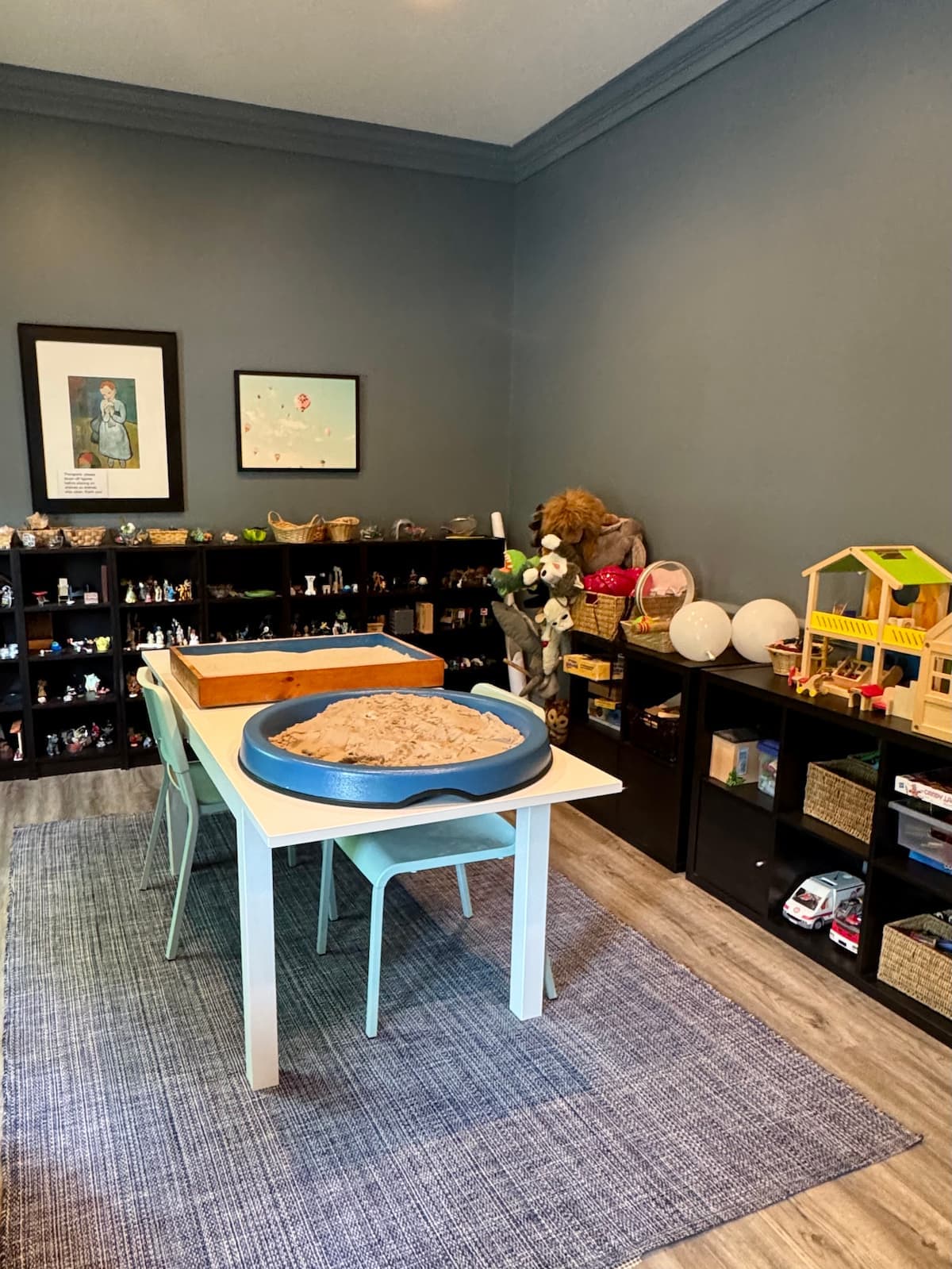
Finding Child Therapy in Alpharetta: A Parent's Starting Guide

How do you find the right therapist for your child when they're struggling? The answer starts with knowing what to look for—appropriate credentials, specialized training in working with children, and an approach that fits your child's specific needs. For parents in Alpharetta, GA searching for child therapy, this guide breaks down exactly what matters.
When your child shows signs of anxiety, behavioral difficulties, emotional struggles, or challenges adjusting to family changes, finding professional support quickly becomes a priority. But child therapy isn't one-size-fits-all, and the therapist you choose significantly affects outcomes.
Why Does the Right Therapist Matter?
Not all therapists work effectively with children. Adult therapy relies primarily on verbal processing and insight, but children—especially younger ones—don't have the cognitive development or vocabulary to engage in traditional talk therapy. Effective child therapists use developmentally appropriate methods that meet children where they are.
Play therapy is particularly effective for preschool and school-age children under 11 years old, as abstract thinking capacity is not fully developed in this population (Koukourikos et al., 2021). Research documents measurable improvements in speech development, behavioral reduction, and socio-emotional skills—particularly communication and problem-solving abilities—when children receive play therapy from trained providers.
The therapeutic relationship also matters. As the National Institute of Mental Health emphasizes, "rapport and trust are essential" because therapy discussions are deeply personal, and children need to feel comfortable with their therapist (NIMH). A therapist who understands child development, uses age-appropriate interventions, and builds genuine connection with your child will produce better outcomes than a generalist without specialized training.
What Credentials Should a Child Therapist Have?
Licensed mental health professionals who work with children typically hold one of these credentials:
LCSW (Licensed Clinical Social Worker): Social workers with clinical training in mental health treatment. Many LCSWs specialize in children and families, with expertise in play therapy, trauma-informed care, and family systems work.
LPC (Licensed Professional Counselor): Counselors trained in various therapeutic approaches. LPCs who specialize in children often use play therapy, art therapy, and cognitive-behavioral techniques adapted for younger populations.
LMFT (Licensed Marriage and Family Therapist): Therapists who focus on relational dynamics within families. LMFTs are particularly effective when a child's struggles connect to family patterns, parenting challenges, or sibling conflicts.
Beyond basic licensure, specialized training in child therapy makes a significant difference. Look for therapists with credentials such as:
RPT (Registered Play Therapist) or RPT-S (Registered Play Therapist-Supervisor): These credentials, awarded by the Association for Play Therapy, indicate advanced training in using play as a therapeutic tool. RPT-S designates supervisors who train other play therapists—the highest level of play therapy expertise.
Research on play therapy shows it produces measurable improvements in behavioral problems, emotional regulation, and communication skills for young children (Koukourikos et al., 2021). A therapist with RPT credentials has specialized training in these techniques, not just general counseling skills.
Why Does Specialized Training in Child Therapy Matter?
Child therapy requires distinct skills that aren't taught in general mental health training programs. Effective child therapists understand:
Developmental stages: A six-year-old processes divorce differently than a twelve-year-old. Therapists need to match interventions to the child's cognitive and emotional development.
Non-verbal communication: Young children express distress through behavior and play rather than words. Trained child therapists know how to read these signals and respond therapeutically.
Parent involvement: Child therapy works best when parents are involved appropriately. The NIMH specifically recommends asking prospective therapists, "If the patient is a child, how will parents or caregivers be involved in treatment?" (NIMH). Effective child therapists communicate regularly with parents, provide guidance on supporting the child at home, and sometimes include family sessions.
A therapist who rarely works with children may use adult-oriented techniques that frustrate or confuse younger clients. Specialized training ensures the therapist can engage your child effectively.
What Questions Should You Ask Before Starting?
Before committing to a therapist, ask questions that reveal their experience, approach, and fit for your child's needs. The NIMH recommends several specific questions (NIMH):
"What is your experience working with children my child's age?"
Experience with the specific age group matters. A therapist who primarily works with teenagers may struggle to engage a five-year-old, and vice versa.
"Do you have specialized training in child therapy or play therapy?"
This reveals whether they've received formal training beyond general licensure. Ask about credentials like RPT or specific training programs they've completed.
"What approach or methods do you use with children who have [your child's specific concern]?"
Effective therapists can describe their approach clearly and explain why it works for your child's issue. Vague answers like "I use an eclectic approach" without specifics may indicate lack of specialized training.
"How will I be involved in my child's treatment?"
Parent involvement varies by the child's age and the therapist's approach. Clarify how often you'll meet with the therapist, what information they'll share, and what role you'll play in supporting the work.
"How do you measure progress?"
Good child therapists track whether treatment is working through observation, standardized measures, parent reports, and regular check-ins about your child's symptoms and functioning.
"How long does treatment typically take for concerns like my child's?"
While no therapist can predict exactly, experienced child therapists can give you a general timeframe based on the issue and the approach they use.
"What are your fees, and do you accept insurance?"
Understand the cost upfront. If the therapist doesn't accept your insurance, ask whether they provide superbills for out-of-network reimbursement.
How Do You Know If It's the Right Fit?
Give the relationship 3-4 sessions to develop before deciding whether the fit works. Early sessions focus on building rapport and gathering information, so deeper therapeutic work often begins later.
For younger children, watch for these signs of good fit:
- Your child goes willingly after the first session or two (initial resistance is normal)
- The therapist engages your child in age-appropriate ways—through play, art, or movement rather than just talking
- Your child mentions something they did or talked about in therapy, suggesting they feel comfortable there
- The therapist communicates clearly with you about what they're observing and working on
- You notice gradual improvements in your child's symptoms or functioning
For older children and teens, signs of good fit include:
- Your child feels heard and understood rather than judged
- The therapist respects your child's privacy while keeping you appropriately informed
- Your child seems more willing to attend sessions as therapy progresses
- You see evidence that your child is learning skills or gaining insight
- The therapist adjusts their approach based on what works for your child
Warning signs of poor fit include:
- Your child consistently resists going after several sessions
- The therapist seems uncomfortable working with children or relies too heavily on talk therapy with young children
- You receive little or no communication about your child's treatment or progress
- Your child's symptoms worsen or new problems emerge without the therapist adjusting the approach
- The therapist dismisses your concerns or observations about your child
If warning signs persist after 3-4 sessions, discuss your concerns directly with the therapist. Sometimes adjusting the approach resolves the issue. Other times, finding a different therapist is the right choice—and that's okay. Fit matters more than sticking with the first provider you try.
What Practical Considerations Matter?
Beyond credentials and therapeutic approach, practical factors affect whether therapy works for your family.
Location and format: Decide whether in-person therapy, telehealth, or a combination works best for your child and your schedule. Young children typically engage better in person where they can use play materials, while older children and teens may do well with telehealth. Georgia-licensed therapists can provide telehealth to clients anywhere in the state.
Availability: Confirm the therapist has regular appointment times that fit your schedule. After-school and weekend appointments fill quickly, so if those are your only options, ask about availability early.
Session length: Most child therapy sessions last 50 minutes.
Consistency: Child therapy works best with regular weekly sessions, at least initially. Consistent attendance allows the therapeutic relationship to develop and gives your child ongoing support as they build new skills.
Parental stress: If you're stressed or overwhelmed, your child feels it. The research on Parent-Child Interaction Therapy shows that effective interventions reduce not just child symptoms but also parenting stress and parental burnout (Çimen & Seçer, 2026). A good child therapist supports the whole family system.
What If You're Not Sure Your Child Needs Therapy Yet?
Many parents wonder whether their child's struggles are "normal" or serious enough to warrant therapy. Here are signs that professional support would help:
- Behavioral problems that interfere with school, friendships, or family life
- Persistent anxiety or worry that limits your child's activities
- Noticeable changes in mood, sleep, appetite, or energy lasting more than two weeks
- Difficulty adjusting to major life changes like divorce, a move, or family loss
- Withdrawal from activities or relationships they previously enjoyed
- Academic struggles that seem connected to emotional or behavioral issues
- Expressions of hopelessness, worthlessness, or thoughts of self-harm
If your child talks about self-harm or suicide, don't wait for a consultation: call or text 988 (the Suicide & Crisis Lifeline), any time. If anyone is in immediate danger, call 911.
If you're unsure, consult with your child's pediatrician or schedule a consultation with a child therapist. A single consultation can help you understand whether therapy would benefit your child now or whether monitoring and parent guidance is sufficient for the moment.
Understanding what happens in a child's first counseling session can also help you decide whether to move forward.
Finding Child Therapy in Alpharetta, GA
When searching for child therapy in Alpharetta, start by identifying your child's primary concern—anxiety, behavioral difficulties, family transitions, trauma, social struggles. Then search for therapists who specialize in that area and have specific training in child therapy.
Personal referrals from your pediatrician, your child's school counselor, or other parents can help, though remember that the right therapist for another family may not fit your child. Each therapeutic relationship is unique.
Online therapist directories from professional organizations like the American Psychological Association and the Association for Play Therapy allow you to filter by location, specialty, and credentials. Look for therapists who clearly state they work with children in your child's age range and have training in developmentally appropriate methods.
If your child is dealing with anxiety, behavioral challenges, family transitions, or emotional struggles, finding the right therapist can make a significant difference. Research consistently shows that evidence-based child therapy produces measurable improvements in symptoms, functioning, and family well-being when delivered by properly trained providers.
McConaghie Counseling offers child therapy and play therapy in Alpharetta, GA, with therapists trained in working with children and families. Andrew McConaghie, LCSW and Tracy McConaghie, LCSW, RPT/S lead a team experienced in helping children navigate anxiety, behavioral challenges, family transitions, and social-emotional difficulties through evidence-based approaches including play therapy, sand tray therapy, and family therapy. We provide both in-person sessions in Alpharetta and telehealth appointments across Georgia. Call 770-645-8933 or visit mcconaghiecounseling.com/contact to schedule a consultation.
References
Çimen, F., & Seçer, İ. (2026). Effectiveness of a Parent–Child Interaction Therapy‐Based Trauma‐Focused Interaction Module for Trauma‐Exposed Children: A Pilot Randomized Controlled Trial. Clinical Psychology & Psychotherapy, 33(2), e70263. https://pmc.ncbi.nlm.nih.gov/articles/PMC13069471/
Koukourikos, K., Tsaloglidou, A., Tzeha, L., Iliadis, C., Frantzana, A., Katsimbeli, A., & Kourkouta, L. (2021). An overview of play therapy. Materia Sociomed, 33(4), 293-297. https://pmc.ncbi.nlm.nih.gov/articles/PMC8812369/
National Institute of Mental Health. Psychotherapies. https://www.nimh.nih.gov/health/topics/psychotherapies