Marriage Counseling in Alpharetta: How to Choose the Right Therapist

How do you know if a couples counselor is qualified to help your relationship? The right therapist can make the difference between meaningful progress and wasted time and money. If you're wondering whether you need counseling in the first place, recognizing the signs that it's time to seek help is the first step. Once you've decided to pursue therapy, finding a therapist with the right credentials, experience, and approach matters for getting results. Marriage counseling works—research demonstrates significant improvements in relationship satisfaction and communication—but not all therapists are equally qualified or suited to your specific issues.
Does Couples Counseling Actually Work?
Research consistently demonstrates that couples counseling produces measurable improvements in relationship satisfaction and functioning. A review in Current Opinion in Psychology found that couples receiving Integrative Behavioral Couple Therapy showed significant improvements in relationship satisfaction with a moderate to large effect size (d = 0.69), along with meaningful reductions in depressive symptoms (Christensen & Doss, 2017). An online version of this treatment showed an 86% completion rate, suggesting that couples find it valuable enough to stick with it.
Research on the Gottman Method found that couples who completed treatment showed dramatic improvements in marital adjustment, with gains maintained at two-month follow-up (Davoodvandi et al., 2018). The study reported highly significant improvements (p = 0.0001) with a very large effect size (eta squared = 0.94).
These findings matter because they demonstrate that marriage counseling isn't just emotionally supportive talk—it produces real, measurable changes in how couples function together.
What Questions Should You Ask a Potential Therapist?
Before committing to marriage or couples counseling, ask these questions to assess whether the therapist is a good fit:
"What is your training and experience with couples therapy?" Not all therapists specialize in relationship work. Ask how many couples they've worked with, what percentage of their practice involves couples counseling, and what specific training they've completed beyond their graduate program.
"What approaches or methods do you use, and what does the research say about their effectiveness?" Evidence-based approaches like the Gottman Method, Emotionally Focused Therapy (EFT), and Integrative Behavioral Couple Therapy have strong research support. A therapist should be able to explain their approach and why it works.
"How do you typically structure sessions—do you meet with us together, individually, or both?" Most couples therapists see partners together, though some may include occasional individual sessions. Understanding the structure helps you know what to expect.
"What is your approach to situations where one partner wants to leave and the other wants to stay?" This question reveals how the therapist handles ambivalence and whether they'll push toward a predetermined outcome versus helping you clarify your own goals.
"How long does couples counseling typically take?" While every situation is different, the therapist should be able to give you a general sense. Research shows the median length of marriage and family therapy is 12 sessions, with 65% of cases completed within 20 sessions (AAMFT). If a therapist suggests open-ended therapy with no sense of timeline or goals, that may be a concern.
"Do you accept our insurance, and what are your fees?" Practical considerations matter. Get clarity on costs upfront, including whether the therapist provides superbills for out-of-network reimbursement.
Why Does the Therapist's Experience with Your Specific Issues Matter?
General couples counseling skills are important, but specific experience with your particular challenges makes a meaningful difference. A therapist experienced with infidelity recovery brings different tools than one who specializes in premarital counseling. A therapist familiar with blended family dynamics understands different challenges than one focused on parenting conflicts.
Ask directly: "Have you worked with couples dealing with [your specific issue—infidelity, divorce decision-making, communication breakdown, sexual concerns, co-parenting conflict]?" You want a therapist who has successfully helped other couples navigate what you're facing.
Also consider whether you need a therapist with specialized training. For example, if substance use is affecting your relationship, a therapist with addiction training becomes important. If you're navigating divorce or separation, a therapist trained in discernment counseling or collaborative divorce processes may be particularly helpful.
How Do You Know if the Therapist Is the Right Fit?
Credentials and experience matter, but so does fit. You and your partner need to feel comfortable enough to be honest about difficult issues. Here's what to assess after an initial consultation:
Does the therapist create a balanced environment? In a first session, both partners should feel heard and respected. If the therapist seems to side with one partner or dismisses one person's concerns, that's a problem.
Do you feel understood? The therapist should demonstrate that they grasp the nature of your relationship challenges, not just respond with generic advice.
Is the therapist direct and practical? Some couples prefer a therapist who offers specific tools and homework between sessions. Others prefer more exploratory, insight-oriented work. Know what you're looking for and assess whether the therapist's style matches.
Does the therapist explain their approach clearly? You should leave the first session with a sense of how therapy will work, what the goals are, and what you can expect.
Most therapists offer an initial consultation or first session where you can assess fit before committing to ongoing work. Use it. If something feels off, it's worth trying a different therapist. Research on therapy outcomes consistently shows that the therapeutic relationship predicts success as much as the specific techniques used.
What If You and Your Partner Disagree About the Therapist?
Sometimes one partner feels comfortable with a therapist while the other doesn't. This is worth taking seriously. Couples counseling requires both people to engage honestly, and if one partner doesn't trust or feel comfortable with the therapist, they won't be open in sessions.
If you disagree, discuss what specifically feels off to the uncomfortable partner. Is it the therapist's style, their approach, something they said, or just an intuitive sense of poor fit? Sometimes concerns can be addressed directly with the therapist. Other times, it's worth trying someone else.
Don't dismiss one partner's discomfort as resistance to therapy. While sometimes reluctance reflects discomfort with the process itself rather than the specific therapist, forcing someone to work with a therapist they don't trust won't produce good outcomes.
What Approaches Work Best for Marriage Counseling?
Several approaches have strong research support for improving relationships:
The Gottman Method focuses on assessment of relationship patterns, building friendship and emotional connection, and managing conflict constructively. It's based on decades of research observing how couples interact. The Gottman approach is particularly helpful for couples who have frequent arguments or feel disconnected.
Emotionally Focused Therapy (EFT) addresses the emotional bonds between partners and helps couples understand the patterns that keep them stuck. EFT is effective for couples who struggle with emotional distance, where one partner withdraws while the other pursues.
Integrative Behavioral Couple Therapy (IBCT) combines behavior change strategies with acceptance work—helping couples change what can be changed while building understanding and acceptance around differences that won't change. IBCT works well for couples with persistent conflicts around personality differences or lifestyle preferences.
Imago Relationship Therapy helps partners understand how their childhood experiences shape adult relationship patterns and provides structured dialogue processes for deeper communication.
No single approach works best for everyone. What matters more is that your therapist uses a structured, evidence-based method rather than just general conversation.
How Long Should You Give Marriage Counseling Before Deciding if It's Working?
Most couples notice some shift—either in how they understand their relationship or in specific interactions—within the first four to six sessions. This doesn't mean all problems are solved, but you should see evidence that therapy is helping: better conversations, reduced intensity of conflicts, increased understanding of patterns, or renewed hope.
If you've attended six to eight sessions and notice no change in how you and your partner interact, that's worth addressing. Talk with your therapist about what's not working. Sometimes a shift in approach helps. Other times, a different therapist may be a better fit.
Therapy shouldn't feel like an endless commitment with no clear progress. Regular check-ins with your therapist about what's working and what needs adjustment keep treatment on track.
What Red Flags Should You Watch For in a Marriage Counselor?
Certain warning signs suggest a therapist may not be the right choice:
- Taking sides consistently rather than maintaining balanced neutrality
- Pushing you toward a specific outcome (stay together or separate) rather than helping you clarify your own goals
- Focusing primarily on individual issues rather than relationship patterns—that's individual therapy with both people present, not couples counseling
- Lacking structure or clear direction—sessions that feel like venting without any framework for change
- Violating boundaries—sharing inappropriate personal information, connecting on social media, or suggesting contact outside of scheduled sessions
- Not addressing safety concerns—if there's domestic violence, substance abuse, or severe mental health crises, these need direct attention, not standard couples therapy
If you notice these issues, raise them with the therapist. If they're not addressed, find someone else.
Finding the Right Marriage Counselor in Alpharetta, GA
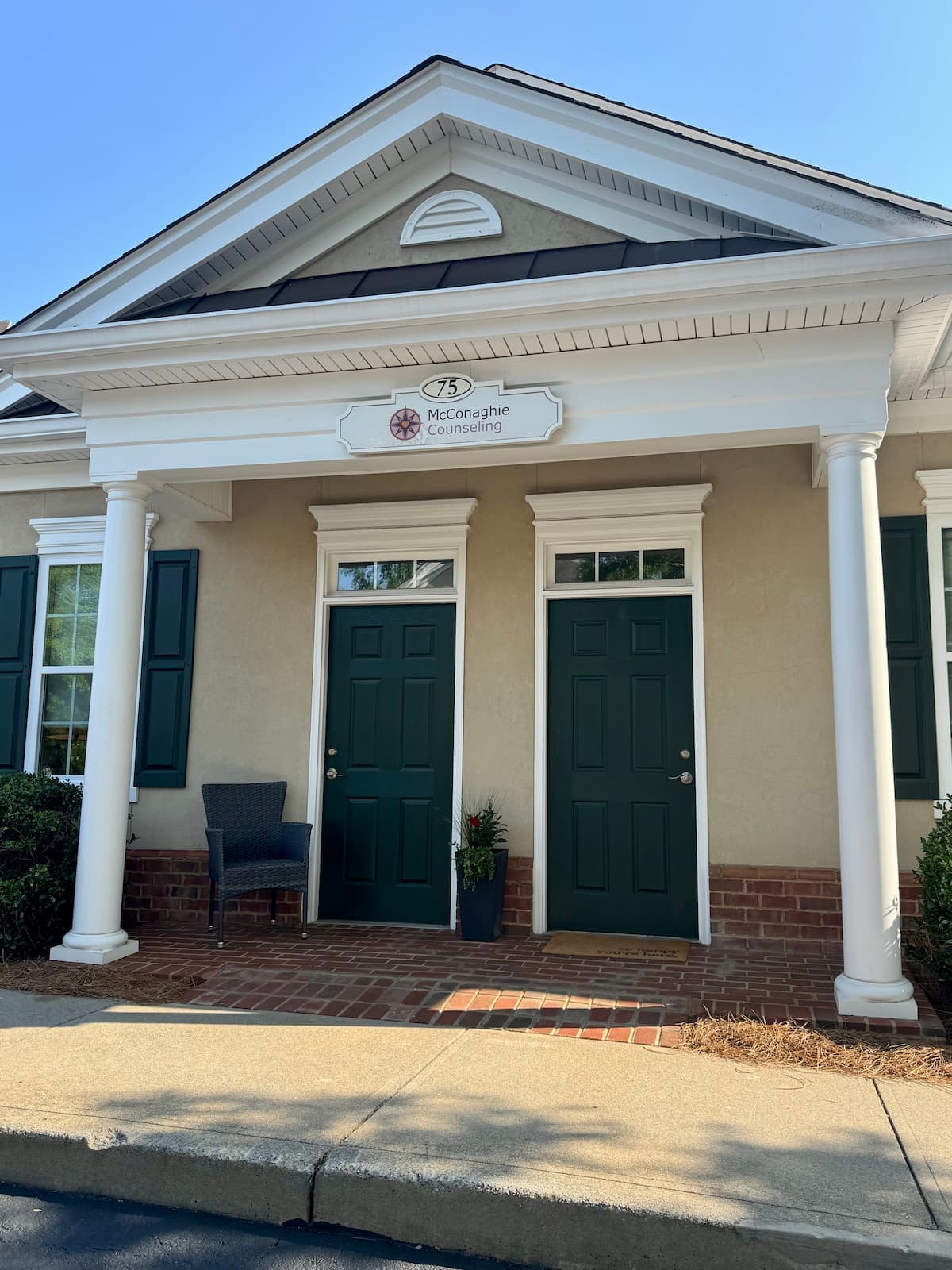
When you're ready to start marriage counseling in Alpharetta, look for licensed therapists who specialize in couples work and use evidence-based approaches. McConaghie Counseling offers marriage and couples counseling with therapists trained in methods including the Gottman Method, Emotionally Focused Therapy, and Imago Relationship Therapy. Andrew McConaghie, LCSW and Tracy McConaghie, LCSW, RPT/S lead a practice committed to practical, solution-focused therapy that helps couples find real change. Contact us to learn how we can help your relationship.
References
American Association for Marriage and Family Therapy. (n.d.). Marriage and family therapists. https://www.aamft.org/AAMFT/Consumer_Updates/MFT.aspx
American Psychological Association. (n.d.). How to choose a psychologist. https://apa.org/topics/choose-therapist
Christensen, A., & Doss, B. D. (2017). Integrative behavioral couple therapy. Current Opinion in Psychology, 13, 111–114. https://pmc.ncbi.nlm.nih.gov/articles/PMC5096782/
Davoodvandi, M., Navabi Nejad, S., & Farzad, V. (2018). Examining the effectiveness of Gottman couple therapy on improving marital adjustment and couples' intimacy. Iranian Journal of Psychiatry, 13(2), 135–141. https://pmc.ncbi.nlm.nih.gov/articles/PMC6037577/