Preparing Your Child for Their First Counseling Session

How do you explain therapy to a child who's never been before? Many parents wonder what to say when the first appointment approaches. The answer depends on your child's age and what brought you to counseling in the first place—but the goal is the same: help them feel safe, understand what will happen, and know that therapy is a place where they can be themselves.
Preparing your child for their first counseling session doesn't require a script or perfect explanation. What matters is offering honest, age-appropriate information that reduces uncertainty. Research shows that up to 75% of parents report insufficient knowledge about how to access mental health services or what to expect once they do (Reardon et al., 2017). When parents feel unclear, children absorb that uncertainty. A few minutes of thoughtful preparation—naming what will happen, who they'll meet, and why you're going—goes a long way toward easing first-session anxiety.
What Should You Tell Your Child Before the First Session?
Your explanation should match your child's developmental stage. Younger children (ages 3–7) need simple, concrete language. Older children and teens benefit from more detail and honesty about why you're seeking help.
For younger children, keep it brief and focus on the "what" rather than the "why." You might say: "We're going to visit someone who helps kids with their big feelings. Her name is Tracy, and she has a room with toys and games. You'll get to play, and she'll talk with you about things that are bothering you." Avoid clinical terms like "therapist" or "mental health"—use "helper," "feelings doctor," or "someone who talks to kids about hard stuff."
For school-age children (ages 8–12), offer more context without overwhelming them. Explain the reason in terms they can relate to: "I noticed you've been feeling really worried about school lately. We're going to meet with someone who helps kids figure out how to feel less worried. It's her job to listen and help you come up with ideas that might make things easier."
For teens, be direct and collaborative. Teens often resist the idea of therapy if they feel forced or if they think it means something is "wrong" with them. Frame it as problem-solving support, not a label: "I know things have been hard with your friendships lately. I found someone who works with teens on exactly this kind of stuff—she's not going to tell you what to do, but she's really good at helping people figure out what might help."
The key across all ages: don't over-promise. Therapy isn't a quick fix, and your child won't leave the first session with all their problems solved. Set realistic expectations: "This is the first time you'll meet her. You'll get to know each other, and she'll ask some questions so she can understand how to help."
What Happens in a First Session?
First sessions are about building rapport and gathering information—not intensive treatment. For most children, especially younger ones, the session looks more like play than "work."
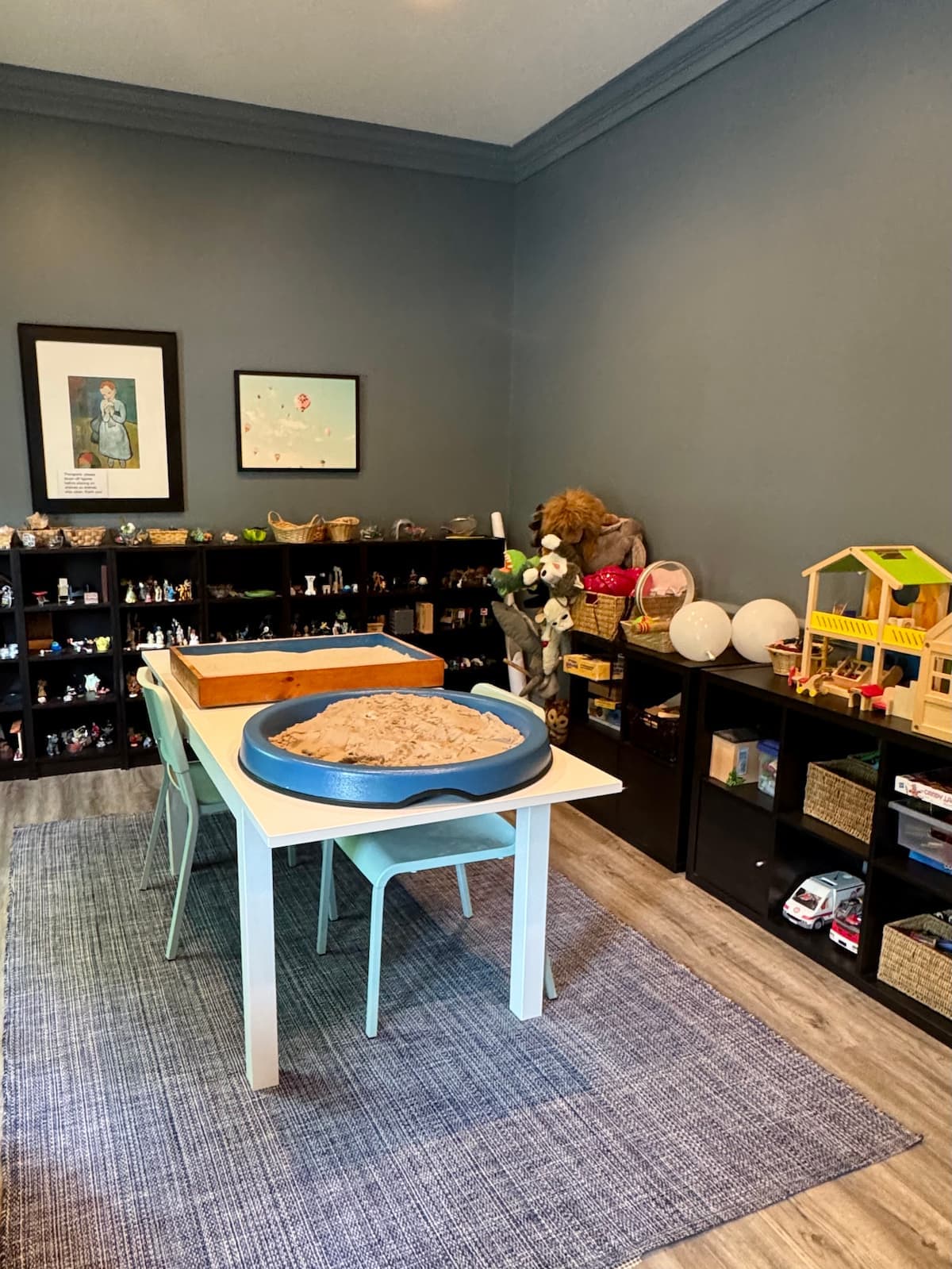
In child counseling and play therapy, therapists often start with informal, interactive activities: drawing, playing a simple game, or exploring the toys in the room. This isn't wasted time—it's how the therapist observes how your child engages, regulates emotions, and communicates. Play is a child's natural language, and therapists trained in play therapy use it to help children express feelings they don't yet have words for.
Older children and teens might spend more time talking, but even then, the first session is usually low-pressure. The therapist will ask about school, friends, hobbies, and family—getting a sense of your child's world before diving into harder topics.
What the therapist won't do: interrogate your child, force them to talk about painful topics before they're ready, or expect them to open up immediately. Trust takes time, and good therapists know that.
What parents should expect: Most therapists will meet briefly with you and your child together at the start, then spend the majority of the session one-on-one with your child. In most cases the therapist will schedule separate parent meetings with you.
How Can You Help Your Child Feel Comfortable?
Your child takes emotional cues from you. If you seem anxious, ashamed, or uncertain about therapy, they'll absorb that. If you're calm and matter-of-fact, they're more likely to feel the same way.
Normalize therapy as a resource, not a punishment. Avoid framing it as a consequence ("You've been so angry lately, so we're going to therapy") or a last resort ("I don't know what else to do with you"). Instead, present it as a tool people use when life gets hard: "Lots of people—kids and grown-ups—talk to therapists when they're going through something tough. It's just a way to get help figuring things out."
Let them bring comfort items. A favorite stuffed animal, small toy, or fidget can help a nervous child feel more grounded. Play therapists welcome these—they're often conversation starters and tools for connection.
Arrive a few minutes early, but not too early. Getting there with time to spare reduces rushing stress, but sitting in a waiting room for 20 minutes can amplify anxiety. Five to ten minutes is ideal.
Acknowledge their feelings without dismissing them. If your child says they're nervous, don't respond with "There's nothing to worry about." Try instead: "I get that. It's normal to feel nervous about meeting someone new. Once you get there, I think you'll feel better, but it's okay to be a little worried right now."
What If Your Child Refuses to Go?
Resistance is common, especially with older children and teens. A child who feels forced into therapy is unlikely to engage, so how you handle refusal matters.
Start by exploring the resistance. Ask open-ended questions: "What worries you most about going?" or "What would make this easier?" Sometimes the concern is practical (they don't want to miss soccer practice) or emotional (they think therapy means they're "crazy"). Once you understand the root, you can address it directly.
For teens, offering some control can help. Let them participate in choosing the therapist, reviewing bios, or deciding on session timing. Collaborative decision-making increases buy-in.
That said, there are situations where therapy isn't optional—if your child is struggling with severe anxiety, depression, self-harm, or behavioral issues that are disrupting their functioning, you may need to set a clear boundary: "I hear that you don't want to go, and we can talk about that. But this is something we're doing because I care about you, and I need to make sure you get the help you need."
If your child talks about self-harm or suicide, don't wait for the first session: call or text 988 (the Suicide & Crisis Lifeline), any time. If anyone is in immediate danger, call 911.
Research on parent engagement in child mental health treatment shows that when parents are clear, consistent, and involved, children are significantly more likely to engage and benefit from therapy (Haine-Schlagel & Walsh, 2015). Your role as the parent isn't to convince your child that therapy will be easy or fun—it's to hold the boundary that this is important, and to show up consistently as they adjust.
What Should You Avoid Saying or Doing?
Even well-meaning parents can accidentally make the first session harder. Here's what not to do:
Don't interrogate your child afterward. After the session, resist the urge to ask "What did you talk about?" or "Did you tell her about [specific incident]?" Therapy is your child's space. If they want to share, they will. Pressing for details can make them feel like therapy isn't really private, which undermines trust. Instead, try: "I'm glad you went today. How did it feel?"
Don't assign them a task or agenda for the session. Before the session, avoid saying "Make sure you tell her about what happened at school" or "Don't forget to bring up your nightmares." Your child needs to feel free to use the session as they need, not perform for you or check boxes off a list. If there's something important you want the therapist to know, tell the therapist directly—don't put that pressure on your child.
Don't use therapy as a threat. "If you don't behave, I'm going to tell your therapist" or "We're going to therapy because of what you did" turns therapy into a punishment. Once that association forms, your child is unlikely to open up.
What Comes After the First Session?
The first session is just the beginning. Therapy is a process, not an event, and progress takes time.
After the initial appointment, the therapist will typically recommend a schedule—often weekly sessions to start, depending on your child's needs. Consistency matters. Research shows that parent participation is I linked to better outcomes for children in therapy (Haine-Schlagel & Walsh, 2015). Showing up consistently signals to your child that this is important and that you're invested in their well-being.
You'll also have periodic check-ins with the therapist to discuss your child's progress, adjust goals, and coordinate on parenting strategies that support what's happening in therapy. This collaborative approach helps therapy work faster and more effectively.
Most importantly: trust the process. Some children connect with their therapist right away. Others take weeks to warm up. If your child says "It was fine" or "I don't know" when you ask how it went, that's normal—it doesn't mean the session didn't help.
Starting therapy is a big step, and preparing your child thoughtfully can make all the difference in how they experience it. If you're looking for child counseling or play therapy in Alpharetta, GA, McConaghie Counseling offers expert, compassionate care for children, teens, and families. Our team includes therapists specially trained in play therapy and child-centered approaches. Reach out at 770-645-8933 or visit our contact page to schedule a first appointment.
References
Haine-Schlagel, R., & Walsh, N. E. (2015). A review of parent participation engagement in child and family mental health treatment. Clinical Child and Family Psychology Review, 18(2), 133–150. https://doi.org/10.1007/s10567-015-0182-x
Reardon, T., Harvey, K., Baranowska, M., O'Brien, D., Smith, L., & Creswell, C. (2017). What do parents perceive are the barriers and facilitators to accessing psychological treatment for mental health problems in children and adolescents? A systematic review of qualitative and quantitative studies. European Child & Adolescent Psychiatry, 26(6), 623–647. https://pmc.ncbi.nlm.nih.gov/articles/PMC5446558/