Rupture and Repair: Reconnecting with Your Child After Conflict

Rupture and repair describes the natural cycle of disconnection and reconnection in parent-child relationships. A rupture occurs when there's a breakdown in communication, understanding, or emotional connection between you and your child. Repair is what happens afterward: the process of acknowledging what went wrong, reconnecting emotionally, and rebuilding trust. Research shows this cycle is not only normal but essential for healthy development. What predicts secure attachment is not the absence of conflict, but the reliability of repair when conflict happens. It is very comforting to most parents to know that perfection as a parent is not only impossible but also not needed to have a healthy family
Developmental psychologist Ed Tronick found that parent-infant pairs are out of sync roughly 70 percent of the time, and that what matters most is not the match but the repair that follows the rupture (Tronick, 1989). The most damaging scenario is not the rupture itself. It is rupture without repair: the child staying stuck in a distressed state, the reaching going unanswered, the disconnection becoming permanent. Children who experience sustained rupture without repair develop a belief that disconnection cannot be fixed. This becomes the mechanism through which adverse experiences produce lasting psychological effects.
Why Do Ruptures Happen?
Ruptures happen constantly because parents and children are separate people with different nervous systems, developmental stages, and needs. A toddler melts down over a broken cracker. A school-age child refuses to do homework after a long day. A teen slams a door when you enforce a screen-time rule. You lose your patience and yell. You dismiss a complaint you think is overblown. You're exhausted and snap over something minor.
None of these moments means you've failed as a parent. They mean you're human, and your child is human too. The rupture is not the problem. What matters is what comes next.
Ruptures intensify when parents are stressed, sleep-deprived, or emotionally depleted. They also increase during developmental transitions: toddlerhood, the transition to school, early adolescence. These are periods when children's needs shift rapidly and parents struggle to adjust in real time. Even attuned, responsive parents experience frequent disconnection. What distinguishes secure parent-child relationships from insecure ones is the consistency of repair.
What Happens to Children When Ruptures Aren't Repaired?
When a rupture goes unrepaired, the child internalizes the disconnection. Young children, who think in concrete and egocentric terms, conclude that the rupture happened because something is wrong with them. They may decide they are too much, too loud, too needy, or unworthy of connection. Over time, unrepaired ruptures teach children that relationships are fragile and that disconnection is permanent.
This shapes how children approach relationships throughout life. Adults who grew up in environments where ruptures were rarely repaired often struggle to trust that conflict can be resolved without abandonment. They may avoid conflict entirely, withdraw at the first sign of tension, or escalate disagreements into relationship-ending crises because they never learned that disconnection can be temporary and fixable.
Research shows that children who experience consistent repair develop emotional resilience, better self-regulation skills, and stronger relationship capacity. They learn that mistakes and misunderstandings are normal parts of relationships, that people can hurt each other and still come back together, and that they themselves are worthy of reconnection even when things go wrong.
How Do You Repair After a Rupture?
Repair does not require perfection. It requires intention. The process has four essential elements: acknowledging what happened, taking responsibility for your part, reconnecting emotionally, and moving forward together.
Acknowledge what happened. Name the rupture out loud. This can be as simple as "I yelled at you earlier and I shouldn't have." Children, especially young children, need their reality validated. When a parent pretends nothing happened or minimizes the rupture, the child learns that their perception cannot be trusted.
Take responsibility for your part. This does not mean accepting blame for your child's behavior or apologizing for enforcing reasonable boundaries. It means owning what you did that caused disconnection: "I was really frustrated and I said something hurtful" or "I didn't listen when you were trying to tell me something important." Taking responsibility models accountability and teaches children that adults make mistakes too.
Reconnect emotionally. Ask how your child felt. Listen without defending yourself or correcting their feelings. If they say they felt scared when you yelled, don't respond with "you don't need to be scared of me." Instead, try "that makes sense. Yelling is scary. I'm sorry I scared you." As Tracy McConaghie, LCSW, RPT/S writes in her work on positive discipline, parents need to "join with our children and show understanding before we move to correcting." This is the foundation of repair: emotional reconnection before problem-solving.
Move forward together. Repair is not complete until both you and your child feel reconnected. For some children, this happens quickly. For others, especially children who have experienced repeated unrepaired ruptures, reconnection takes longer. Follow your child's lead. Some children need physical closeness: a hug, sitting together, or holding hands. Others need space and time to process before they're ready to reconnect. Respect both.
What If Your Child Won't Accept Your Repair Attempt?
Sometimes children push away repair attempts. They refuse to talk, stay angry, or say "I don't care" when you try to reconnect. This does not mean repair has failed. It means your child is still processing the rupture and may not be ready yet.
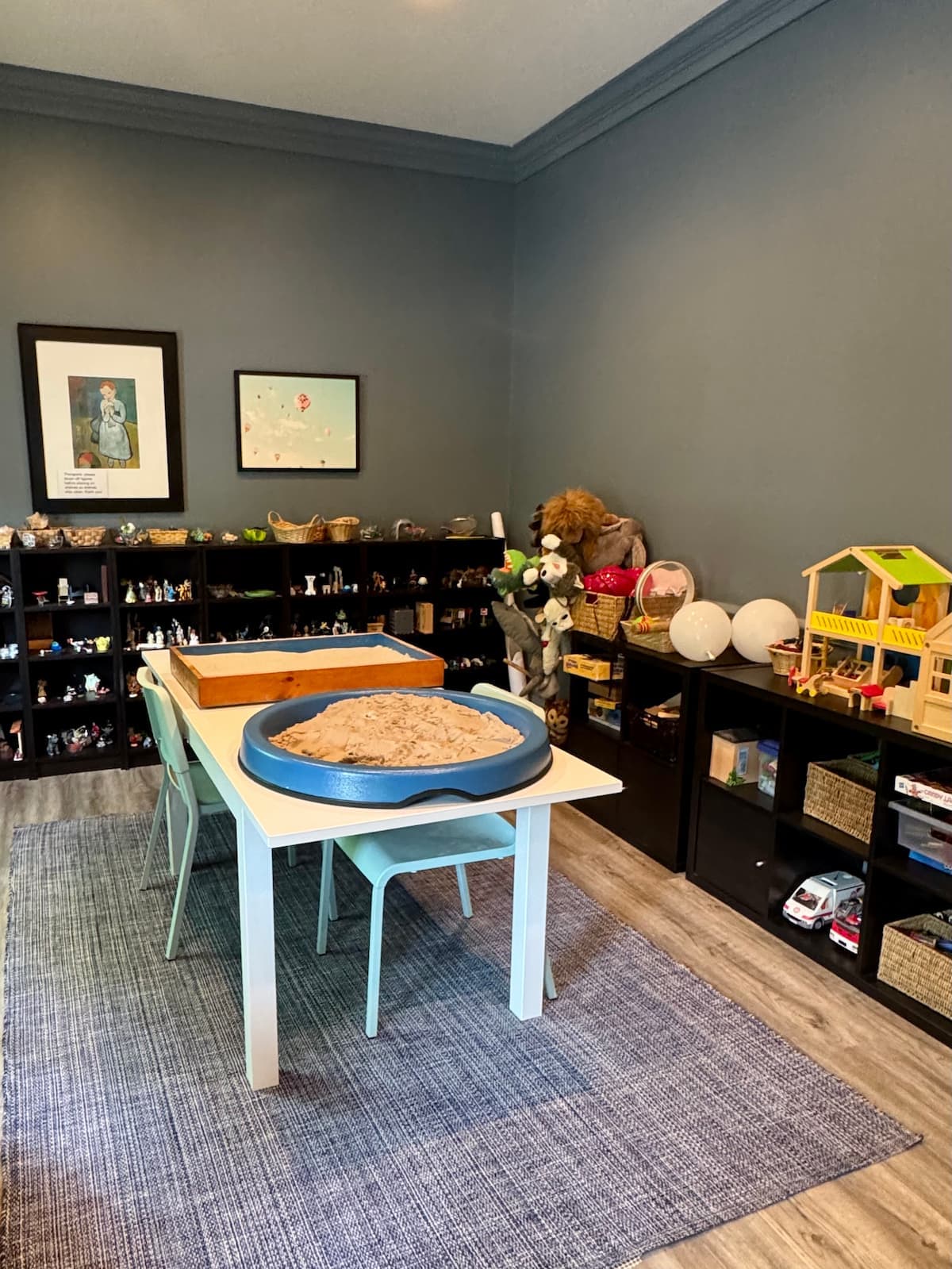
Young children often lack the language to express complex emotions. They may act out their distress through defiance, withdrawal, or aggression. Play therapy provides children with a non-verbal way to process conflict and practice repair. Through play, children express feelings they cannot yet articulate and rehearse reconnection in a safe, symbolic space.
Older children and teens may resist repair because they fear vulnerability or have learned that adults are unreliable. If you have a history of unrepaired ruptures, your child may not trust that this attempt is different. The answer is consistency. Keep offering repair, even when it's rejected. Over time, repeated reliable attempts teach children that you mean it and that reconnection is safe.
How Does Positive Discipline Support Repair?
Positive Discipline, developed by Dr. Jane Nelsen, emphasizes connection before correction. The framework recognizes that children cannot learn when they are emotionally dysregulated and that effective discipline must begin with reconnection. This aligns perfectly with the rupture-and-repair framework.
One of the core principles of Positive Discipline is teaching children that mistakes are opportunities for learning, not occasions for shame. When parents model repair after their own mistakes, children internalize this belief: that people can mess up, make amends, and move forward. This reduces shame, builds resilience, and creates a family culture where accountability is expected and forgiveness is reliable.
Tracy McConaghie is trained in Positive Discipline and integrates this approach with play therapy to help families practice repair in real time. Parents learn to stay regulated during conflict, recognize when ruptures have occurred, and use Positive Discipline tools to reconnect without sacrificing boundaries or structure. Children learn emotional vocabulary, perspective-taking, and problem-solving skills that reduce the intensity and frequency of future ruptures.
Can Repair Become Easier Over Time?
Yes. Repair is a skill that improves with practice. The first few attempts may feel awkward, scripted, or ineffective. Children may not respond the way you hope. You may forget steps or fall back into old patterns. This is normal.
Over time, as repair becomes a consistent part of your family's pattern, several things happen. Ruptures become less intense because both you and your child trust that reconnection will happen. Children begin initiating repair themselves, saying "I'm sorry I yelled at you" or "can we talk about what happened?" Parents become more attuned to early signs of disconnection and can intervene before ruptures escalate.
Research on brain-to-brain synchronization shows that repeated cycles of attunement, rupture, and repair actually strengthen the parent-child bond. Each successful repair builds the child's confidence that the relationship is safe, that conflict is survivable, and that you will come back for them even when things go wrong.
What If You're Still Struggling with Repair?
If you find yourself stuck in patterns of repeated ruptures without repair, or if your child's distress after conflict feels disproportionate to the situation, family therapy or parent coaching can help. Sometimes the difficulty repairing signals unrecognized stress, unresolved trauma, or attachment patterns that need professional support.
Play therapy helps children who cannot yet verbalize their feelings process rupture and practice repair in a developmentally appropriate way. Parent coaching teaches specific repair strategies tailored to your child's age, temperament, and your family's unique dynamics. Family therapy addresses systemic patterns that make repair difficult, such as unspoken resentments, mismatched expectations, or communication breakdowns between co-parents.
The capacity to repair after rupture is one of the most important skills a parent can teach. It builds emotional resilience, secure attachment, and the foundation for healthy relationships throughout a child's life. Ruptures will happen. Conflict is inevitable. What distinguishes thriving families from struggling ones is not the absence of disconnection, but the commitment to reconnection when things go wrong.
Andrew McConaghie, LCSW and Tracy McConaghie, LCSW, RPT/S work with families in Alpharetta, GA to strengthen parent-child relationships using Positive Discipline, play therapy, and solution-focused approaches. If you're finding repair difficult or feeling stuck in cycles of conflict, we can help. You can reach our office at 770-645-8933 or schedule online.
References
Positive Discipline Association. Connection before correction. https://www.positivediscipline.com/articles/connection-correction-0/
Tronick, E. Z. (1989). Emotions and emotional communication in infants. American Psychologist, 44(2), 112-119. https://pubmed.ncbi.nlm.nih.gov/2653124/