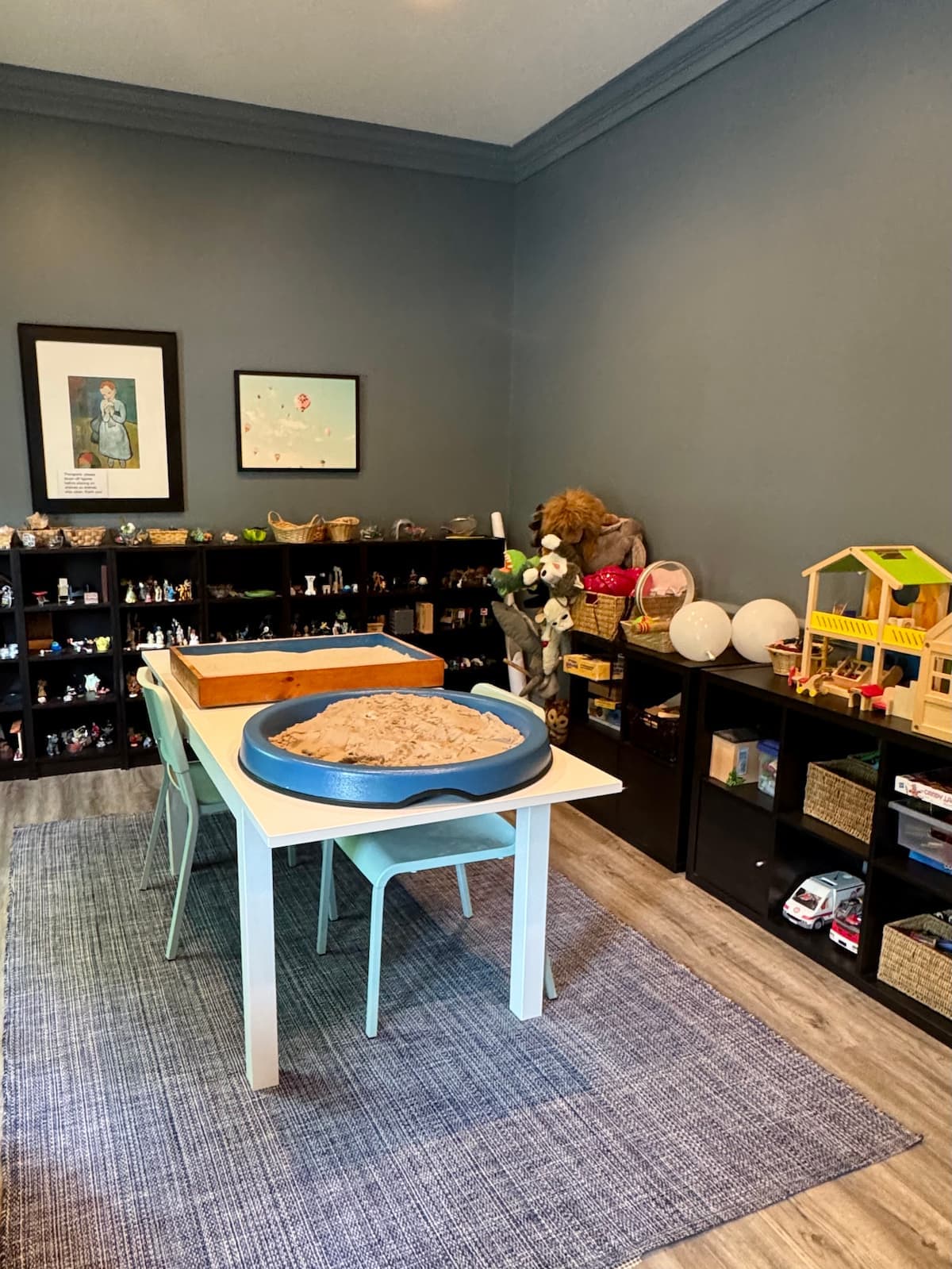
Signs Your Child Needs Play Therapy

How do you know if your child needs play therapy? If your child is struggling with behaviors or emotions they can't seem to manage—persistent tantrums, withdrawal, sudden school refusal, or reactions to a difficult life event—play therapy may help. Play therapy uses the natural language of childhood to address emotional and behavioral challenges in children ages 3 to 12.
Play therapy is most effective when parents recognize the signs early and seek help before patterns become deeply entrenched. Here are the key indicators that your child could benefit from this specialized approach.
What Behavioral Changes Suggest a Child Needs Help?
Sudden or persistent changes in behavior often signal that a child is struggling with something they can't express in words. Children who need play therapy may show:
- Regression in developmental skills — bedwetting after being toilet-trained, baby talk, or increased clinginess
- Aggressive outbursts — hitting, biting, or destructive behavior that seems out of proportion to the situation
- Extreme defiance or withdrawal — refusing to cooperate with basic requests or pulling away from family activities they used to enjoy
- School refusal or avoidance — complaints of stomachaches or headaches to avoid school, or intense distress at drop-off
Research shows that play therapy effectively addresses these behavioral concerns. A meta-analysis of play therapy outcomes found an average treatment effect size of 0.66, meaning children who received play therapy performed 25 percentile units higher on outcome measures compared to children who did not receive treatment (LeBlanc & Ritchie, 2001).
How Do You Know If Anxiety or Fear Is Becoming a Problem?
All children experience worry and fear—it's a normal part of development. However, anxiety becomes a concern when it interferes with daily functioning. Signs that anxiety may require play therapy include:
- Sleep disruption — difficulty falling asleep, nightmares, or refusal to sleep alone
- Physical symptoms — frequent stomachaches, headaches, or complaints with no medical cause
- Avoidance of age-appropriate activities — refusing playdates, avoiding school, or declining activities they previously enjoyed
- Excessive worry or reassurance-seeking — asking the same questions repeatedly or needing constant comfort
A 2024 randomized controlled trial examining cognitive-behavioral group play therapy found that anxiety-based school refusal and behavioral problems in the intervention group showed a significant decrease (p < 0.001) after ten therapy sessions (Shayganfard et al., 2024).
What Emotional Signs Indicate a Child Needs Play Therapy?
Children often lack the vocabulary to express complex emotions verbally. Instead, their feelings emerge through behavior and play. Emotional signs that may warrant play therapy include:
- Persistent sadness or irritability — a child who seems unhappy most of the time or has frequent emotional meltdowns
- Difficulty identifying or expressing feelings — saying "I don't know" when asked about emotions, or showing confusion about what they're feeling
- Emotional numbness or flatness — appearing disconnected or showing little reaction to events that would typically evoke a response
- Intense emotional reactions to minor events — crying inconsolably over small disappointments or becoming enraged by minor frustrations
Play therapy provides children an opportunity to process painful events and express emotions in ways that feel natural to them. Research published in Cureus identifies play therapy as effective for behavioral issues, anxiety, depression, trauma, and difficulties in relationships, with the approach most commonly used for children aged three to 12 years (Gupta et al., 2023).
When Should You Seek Play Therapy After a Traumatic Event?
Children who experience trauma—divorce, death of a loved one, medical procedures, accidents, or witnessing violence—may benefit from play therapy even if they don't show obvious distress. Trauma responses in children can be delayed or manifest in unexpected ways.
Post-traumatic signs to watch for include:
- Repetitive play themes — acting out the same scenario over and over, particularly if it involves danger, injury, or distress
- New fears or hypervigilance — sudden fear of situations that didn't previously bother them, or appearing constantly on edge
- Changes in attachment — becoming either extremely clingy or unusually distant from caregivers
- Loss of previously acquired skills — regression in speech, motor skills, or self-care abilities
Play therapy helps traumatized children by allowing them to process experiences through the symbolic and role-play activities that naturally move traumatic material from nonverbal areas of the brain to regions where it can be integrated and understood.
How Long Should Problems Persist Before Seeking Help?
Some behavioral and emotional difficulties are temporary responses to normal developmental challenges or brief stressors. However, you should consider play therapy when:
- Symptoms last more than a few weeks — behaviors or emotions that persist beyond a month without improvement
- The intensity is increasing — problems are getting worse rather than better with time and support
- Multiple areas of life are affected — struggles appear at home, at school, and in social settings
- Your usual parenting strategies aren't working — interventions that worked in the past no longer help
- Your child's distress is obvious — they appear unhappy, anxious, or frustrated much of the time
The play therapy meta-analysis found that optimal outcomes occurred with approximately 30 to 35 sessions, though improvements often begin earlier. Parent involvement in the therapeutic process significantly enhanced effectiveness (LeBlanc & Ritchie, 2001).
What If Your Child Can't Explain What's Wrong?
One of the strengths of play therapy is that it doesn't require a child to verbally articulate their struggles. In fact, play therapy exists precisely because young children lack the cognitive and expressive capabilities needed to benefit from traditional talk therapy.
Through play therapy, children communicate through:
- Toy selection and play themes — choosing toys and creating scenarios that reflect their inner experiences
- Symbolic representation — using dolls, puppets, or figures to act out feelings and situations
- Creative expression — drawing, painting, or building to convey what words cannot capture
- Relationship with the therapist — developing trust and safety in a therapeutic relationship
Play therapists are trained to observe behavior and play patterns rather than relying exclusively on verbal communication. This makes play therapy accessible even to very young children or those with developmental delays that affect speech.
Should You Wait to See If Problems Resolve on Their Own?
Many parents hesitate to seek therapy, hoping their child will "grow out of" concerning behaviors. While some challenges do resolve naturally, others become more entrenched over time.
Consider seeking play therapy sooner rather than later if:
- Your parental instinct tells you something is wrong
- Teachers or caregivers express concern about your child's behavior or emotions
- Your child's difficulties are causing them distress or affecting their development
- Family stress or a major life change has occurred
Early intervention often leads to faster resolution. Children are remarkably responsive to play therapy, particularly when problems are addressed before they become deeply rooted patterns.
If you're concerned about your child's emotional or behavioral well-being, play therapy provides a developmentally appropriate way to help them process difficult experiences and build coping skills. To learn more about what happens in a play therapy session, or to schedule a consultation with one of our play therapists in Alpharetta, reach out to Andrew McConaghie, LCSW and Tracy McConaghie, LCSW, RPT/S at McConaghie Counseling. We offer both in-person and virtual sessions for children and families in Georgia.
References
Gupta, N., Chaudhary, R., Gupta, M., Ikehara, L. H., Zubiar, F., & Madabushi, J. S. (2023). Play therapy as effective options for school-age children with emotional and behavioral problems: A case series. Cureus, 15(6), e40590. https://pmc.ncbi.nlm.nih.gov/articles/PMC10328142/
LeBlanc, M., & Ritchie, M. (2001). A meta-analysis of play therapy outcomes. Counselling Psychology Quarterly, 14(2), 149-163. https://www.ncbi.nlm.nih.gov/books/NBK68621/
Shayganfard, M., Kaboudi, B., Arabsheibani, K., Shakiba, E., & Cheshmekaboudi, S. (2024). Effectiveness of cognitive-behavioral group play therapy on anxiety-based school refusal and behavioral problems in elementary school boys: A preliminary randomized controlled trial. Archives of Psychiatric Nursing, 50, 108-114. https://pubmed.ncbi.nlm.nih.gov/38789222/