What Happens in Couples Counseling? A First-Timer's Guide
What actually happens when you walk into a couples counseling session? If you've never been, the process can feel opaque—and that uncertainty keeps some couples from reaching out. Couples therapy follows a structured approach designed to understand your relationship patterns, identify what's not working, and teach specific skills to improve how you connect and resolve conflict. Most therapists use an initial assessment period followed by active skill-building work, with the timeline and focus tailored to what your relationship needs.
The format varies slightly depending on the therapeutic approach—Emotionally Focused Therapy, the Gottman Method, and Integrative Behavioral Couple Therapy each emphasize different aspects of relationship repair—but the core structure remains consistent across evidence-based models.
What Happens in the First Session?
The first couples therapy session focuses on understanding your relationship history and current struggles. Your therapist will ask you to share what brought you to therapy, but rather than diving immediately into problem-solving, most clinicians begin with your relationship's oral history—how you met, early memories of dating, major transitions you've navigated together, and what drew you to each other initially.
This isn't idle conversation. Hearing how couples talk about their shared history—the tone, the fondness (or lack of it), how partners respond to each other's memories—gives therapists crucial information about the relationship's emotional foundation. Research on the Gottman Method identifies that couples who maintain positive sentiment override (more positive than negative interactions) and who can recall their relationship's beginnings with warmth tend to have better therapy outcomes.
Your therapist will also ask you to discuss a specific issue that's been difficult to resolve. This serves as a live sample of how you communicate when facing conflict—whether you criticize or complain constructively, how defensiveness shows up, whether one partner withdraws, how (or if) you repair after tension. Observing these patterns in real time allows the therapist to identify which skills need strengthening.
The first session usually ends with the therapist explaining the assessment process ahead and answering questions about confidentiality, session frequency, and what to expect next.
Why Do Therapists Meet with Each Partner Individually?
After the initial joint session, most couples therapists schedule individual sessions with each partner separately. These aren't "vent sessions" where you list complaints about your spouse—though therapists do want to hear your frustrations. Individual sessions serve several specific purposes that improve the effectiveness of the work ahead.
First, they allow each partner to share information they might filter or withhold with their spouse present. This could include concerns about the relationship that feel too vulnerable to voice jointly yet, worries about therapy itself, or sensitive topics like substance use, undisclosed affairs, or ambivalence about staying in the relationship. Therapists need complete information to assess safety and determine whether couples therapy is appropriate or whether individual work should come first.
Second, individual sessions help the therapist understand each partner's personality, attachment history, triggers, and what they hope therapy will accomplish. Some people enter therapy wanting specific behavioral changes from their partner; others want help deciding whether to stay or leave. Understanding those differing (or aligned) goals shapes how the therapist approaches treatment.
Third, these sessions build trust. Couples therapy only works if both partners feel the therapist understands them and won't take sides. Individual time helps establish that foundation before diving into the more challenging joint work ahead.
Confidentiality in individual sessions varies by therapist and therapeutic model. Some clinicians maintain strict confidentiality for what's shared individually; others use a "no secrets" policy where anything shared individually can be brought into joint sessions if clinically relevant. Your therapist will clarify their approach at the outset.
What Does the Assessment Period Involve?
Couples therapy typically includes a comprehensive assessment phase spanning the first two to three sessions. During this period, the therapist gathers information about the relationship's context and ecology—how you solve problems together, whether you communicate clearly, how you share responsibilities, your patterns of emotional connection and distance.
Some therapists use formal assessment tools or questionnaires measuring relationship satisfaction, communication patterns, conflict styles, or attachment. Others rely primarily on clinical observation and conversation. Either way, the assessment period allows the therapist to identify patterns that distinguish distressed couples from satisfied ones, including negative behaviors like criticism, contempt, defensiveness, and stonewalling, and positive ones like interest, validation, and affection.
The therapist assesses not just problems but relationship strengths—what's still working, what drew you together, where you already show resilience or effective connection. Therapy builds on existing strengths rather than starting from scratch, so identifying what you're already doing well matters as much as diagnosing what's broken.
When Does the Therapist Present a Treatment Plan?
After completing the assessment, usually by the fourth session, your therapist will present their findings. This typically happens in a joint session where both partners are present. The therapist will outline the relationship's strengths, the patterns that are contributing to distress, and a roadmap for the work ahead—specific, measurable goals you can reference as you learn and implement new tools.
The treatment plan isn't a generic script. It's tailored to your relationship's particular patterns and the goals you've identified. For a couple struggling with escalating conflicts, the plan might focus on de-escalation skills and repairing after fights. For partners experiencing emotional distance, the focus might shift toward rebuilding intimacy and vulnerability. For couples navigating a major betrayal or transition, the plan accounts for the specific work that situation requires.
This session also clarifies the therapeutic approach the clinician will use and what that means practically—what you'll do in sessions, what's expected between sessions, how progress will be measured. It's an opportunity to ask questions, voice concerns, or adjust the plan if it doesn't feel aligned with what you need.
What Happens in Typical Sessions After the Assessment?
Once the assessment and treatment planning conclude, ongoing couples therapy sessions shift to active skill-building and pattern interruption. The therapist acts as educator, coach, and commentator—modeling healthier communication, guiding you through practice exercises, providing real-time feedback as you interact, and gradually shaping more positive exchanges.
Many sessions include structured exercises where you practice new skills with the therapist present to coach and correct. For example, you might practice speaker-listener techniques where one partner shares a concern while the other paraphrases and validates before responding—slowing down the escalation that typically happens when both partners talk over each other or respond defensively before fully hearing what was said.
Other sessions focus on deepening emotional connection. The therapist helps each partner access and express vulnerable emotions—fear, hurt, longing for closeness—that often hide beneath surface-level anger or withdrawal. When partners can share their underlying attachment needs and respond to each other's vulnerability with care rather than defensiveness, the relationship's emotional foundation strengthens.
Therapists also assign between-session work—practicing communication skills at home, scheduling connection rituals, implementing agreements you've made in session. Progress in therapy depends significantly on whether couples apply what they're learning outside the therapy room, where the real relationship happens.
How Long Does Couples Therapy Take?
The duration varies widely based on the severity of relationship distress, how entrenched negative patterns have become, and how consistently both partners engage in the work. Some couples see meaningful improvement within 8-12 sessions, particularly if they enter therapy when problems are relatively recent and both partners remain motivated to repair the relationship.
Other couples require longer-term work—six months to a year or more—especially when navigating complex issues like infidelity recovery, deeply rooted attachment injuries, or patterns that have calcified over many years. Meta-analytic research examining 33 randomized controlled trials (2,730 participants) found that couples therapy produces medium effect sizes at post-treatment (emotionally focused therapy: g = 0.73; behavioral couples therapy: g = 0.53), with gains maintained at six-month follow-up (Rathgeber et al., 2019). However, sustaining those improvements beyond one year often requires continued practice of the skills learned in therapy.
Many therapists start with weekly sessions and gradually space them out—every other week, then monthly—as couples demonstrate improvement and confidence in applying skills independently. Some couples return for "booster" sessions during particularly stressful periods or life transitions even after completing initial therapy.
What If One Partner Is More Invested Than the Other?
It's common for partners to enter therapy with different levels of motivation or optimism. One person may be highly committed to saving the relationship while the other remains skeptical that therapy will help, or even ambivalent about whether they want the relationship to continue.
Therapists are trained to work with discrepant commitment levels. Part of early assessment involves gauging each partner's investment and addressing that disparity directly. If one partner has emotionally checked out or is actively planning to leave, the therapist needs to know—because the therapeutic approach differs significantly when the goal is ending the relationship well versus repairing it.
That said, therapy can still help even when commitment levels differ. Sometimes the less-invested partner's skepticism softens once they experience a therapist who doesn't assign blame and who helps them feel understood. Other times, therapy clarifies for both partners whether the relationship is viable—and if not, how to separate in a way that minimizes damage, particularly when children are involved.
A qualitative meta-analysis of 15 studies examining client-reported outcomes found that couples identified "clarity on the decision to separate" as one of the outcomes of therapy—sometimes recognizing that separation is appropriate is itself a valuable result (O'Malley et al., 2023).
What Do Couples Report Experiencing in Therapy?
Research on client-reported outcomes provides insight into what couples actually experience during and after therapy. The same 2023 meta-analysis identified seven main outcome clusters: seeing things differently, changed behavior within the relationship, improved experience in the relationship, improved communication quality, improvement in relationship functioning, improved individual functioning, and difficult outcomes of therapy.
Clients reported constructive outcomes including new understanding of the couple's interactional patterns, improvement in conflict management, new positive ways of relating and connecting, letting go of unrealistic expectations imposed on their partner, and changes within themselves contributing to relationship improvement (O'Malley et al., 2023).
These findings align with what therapists observe: couples who complete therapy often don't just report feeling happier with each other—they describe seeing their relationship dynamics differently, recognizing patterns they couldn't see before, and possessing specific tools to navigate conflict and maintain connection that they lacked previously.
What Makes Couples Therapy Effective?
Couples therapy works through several interconnected mechanisms. First, it interrupts destructive interaction patterns. Many distressed couples are locked in cycles where each partner's behavior triggers and reinforces the other's—one withdraws, the other pursues and criticizes, which drives further withdrawal, escalating the cycle. Therapy helps couples step outside these patterns long enough to establish new, healthier interactions.
Second, therapy teaches specific communication and conflict-resolution skills that many couples lack. Research on behavioral couples therapy found that therapists who observe couple interactions, model desired behaviors, and guide practice exercises help couples develop functional communication skills that produce long-lasting changes in interaction patterns.
Third, effective therapy addresses underlying emotional needs. Particularly in approaches like Emotionally Focused Therapy, therapists help partners access and express vulnerable attachment needs—needs for safety, responsiveness, validation—that conflict and defensiveness often obscure. When partners can express these needs and respond to each other's vulnerability with empathy rather than dismissiveness, the relationship's emotional bond strengthens.
Finally, therapy provides a structured space where both partners feel heard by a neutral third party. Simply having someone who understands both perspectives, doesn't take sides, and helps translate what each person is trying to communicate can break through impasses that couples couldn't resolve alone.
Is Couples Counseling Right for Your Relationship?
If you've been considering couples therapy but weren't sure what it would involve, the structure described here is what most evidence-based approaches follow. You'll spend initial sessions helping the therapist understand your relationship, participate in individual meetings, receive a tailored treatment plan, and then work actively on changing patterns and building skills.
If you're recognizing patterns in your relationship that aren't improving on their own—whether that's escalating conflict, growing distance, the same arguments recycling without resolution, or simply a sense that you've lost the connection you once had—couples therapy provides structured support to address those patterns before they become more entrenched. As research consistently shows, couples who wait years before seeking help often find the therapeutic work more challenging than it would have been earlier.
Starting Couples Counseling in Alpharetta, GA
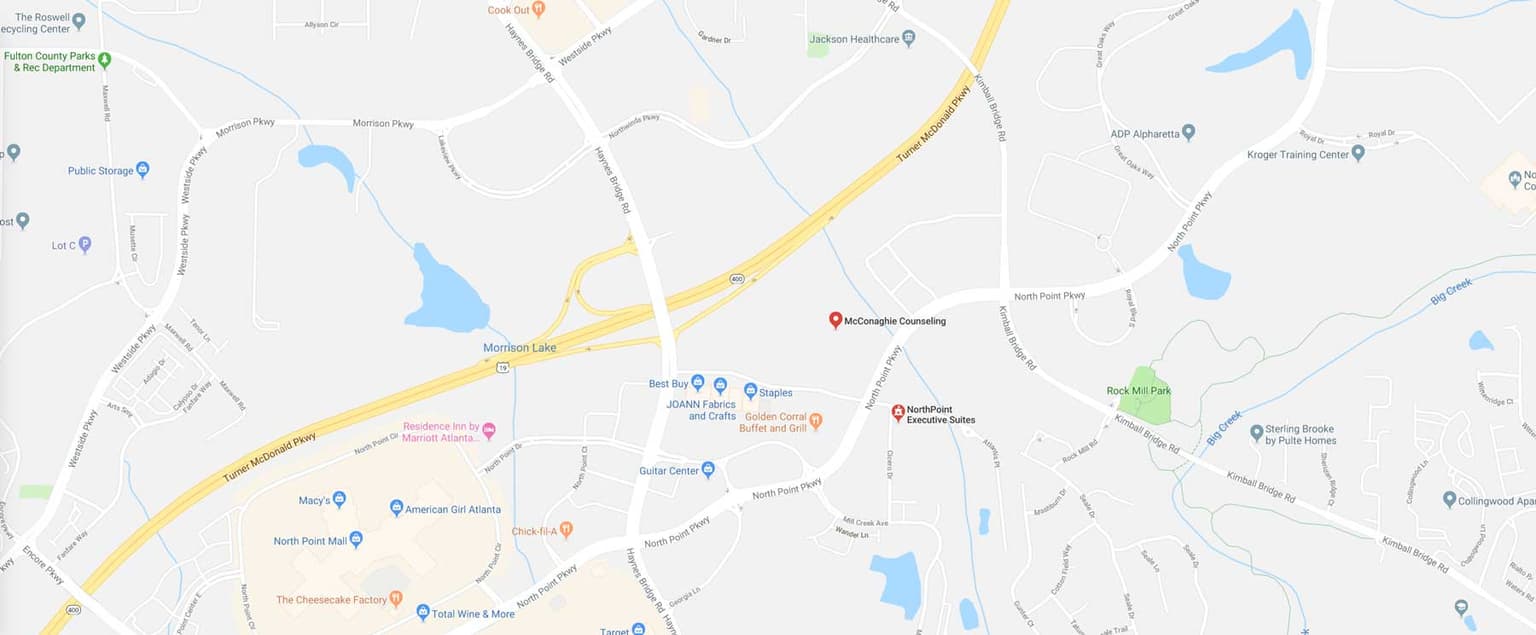
If you're ready to take the next step, finding a therapist trained in evidence-based couples therapy matters. McConaghie Counseling offers in-person couples counseling in Alpharetta, GA and telehealth throughout Georgia. Our therapists use research-backed approaches—including Emotionally Focused Therapy, the Gottman Method, and Integrative Behavioral Therapy—to help couples improve communication, rebuild connection, and navigate difficult transitions. Practice founders Andrew McConaghie, LCSW and Tracy McConaghie, LCSW, RPT/S have worked with hundreds of couples at every stage—from those addressing early patterns to those recovering from significant betrayals or deciding whether to stay together.
Contact us to schedule a consultation and learn how couples therapy can help your relationship.
References
O'Malley, P., Glenny, E., Poppleton, A., & Timulak, L. (2023). A qualitative meta-analysis exploring client-reported outcomes of couple therapy. Psychotherapy (Chicago, Ill.), 60(4), 612–628. https://pubmed.ncbi.nlm.nih.gov/37902658/
Rathgeber, M., Bürkner, P. C., Schiller, E. M., & Holling, H. (2019). The efficacy of emotionally focused couples therapy and behavioral couples therapy: A meta-analysis. Journal of Marital and Family Therapy, 45(3), 447–463. https://pubmed.ncbi.nlm.nih.gov/29781200/